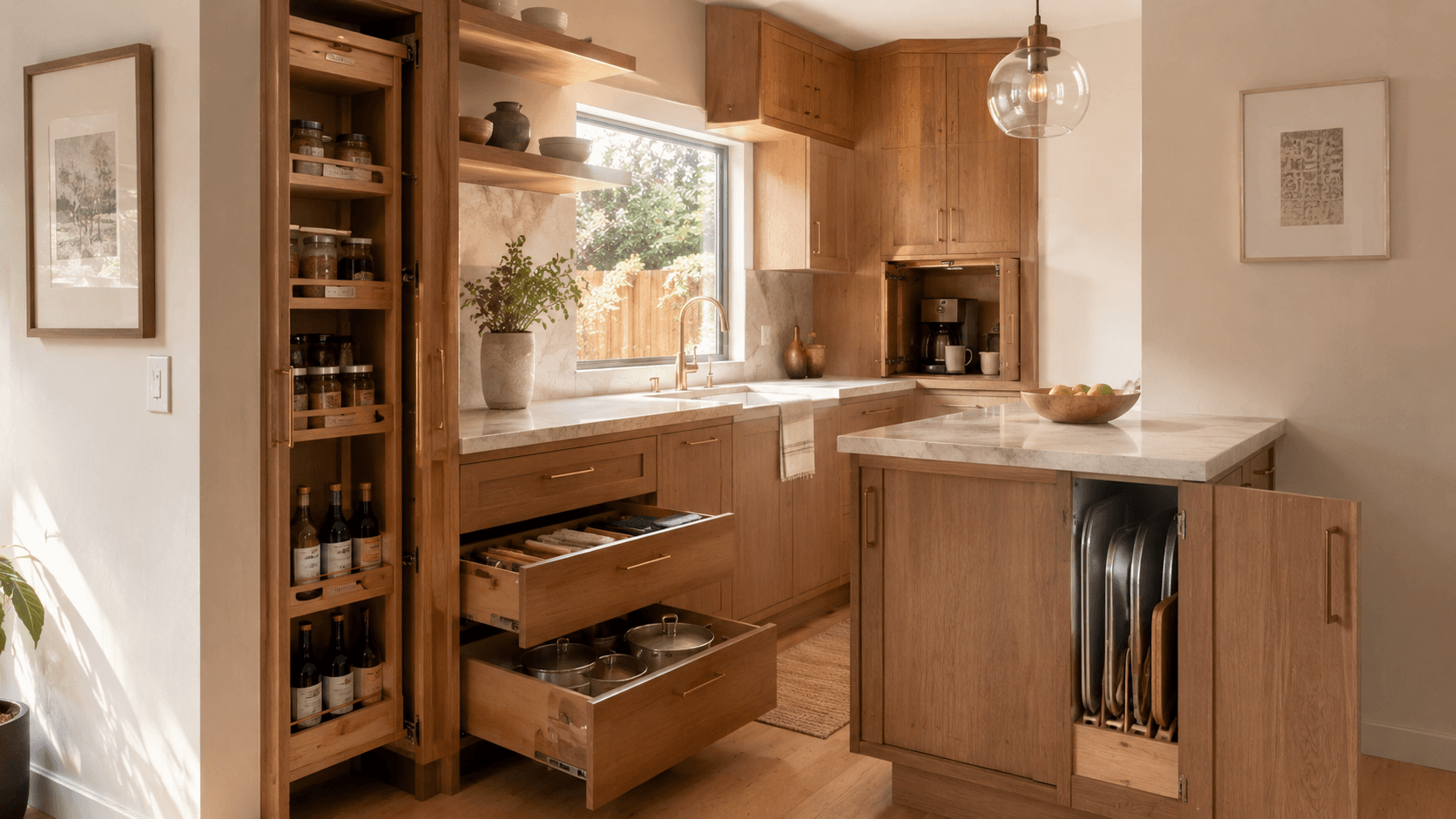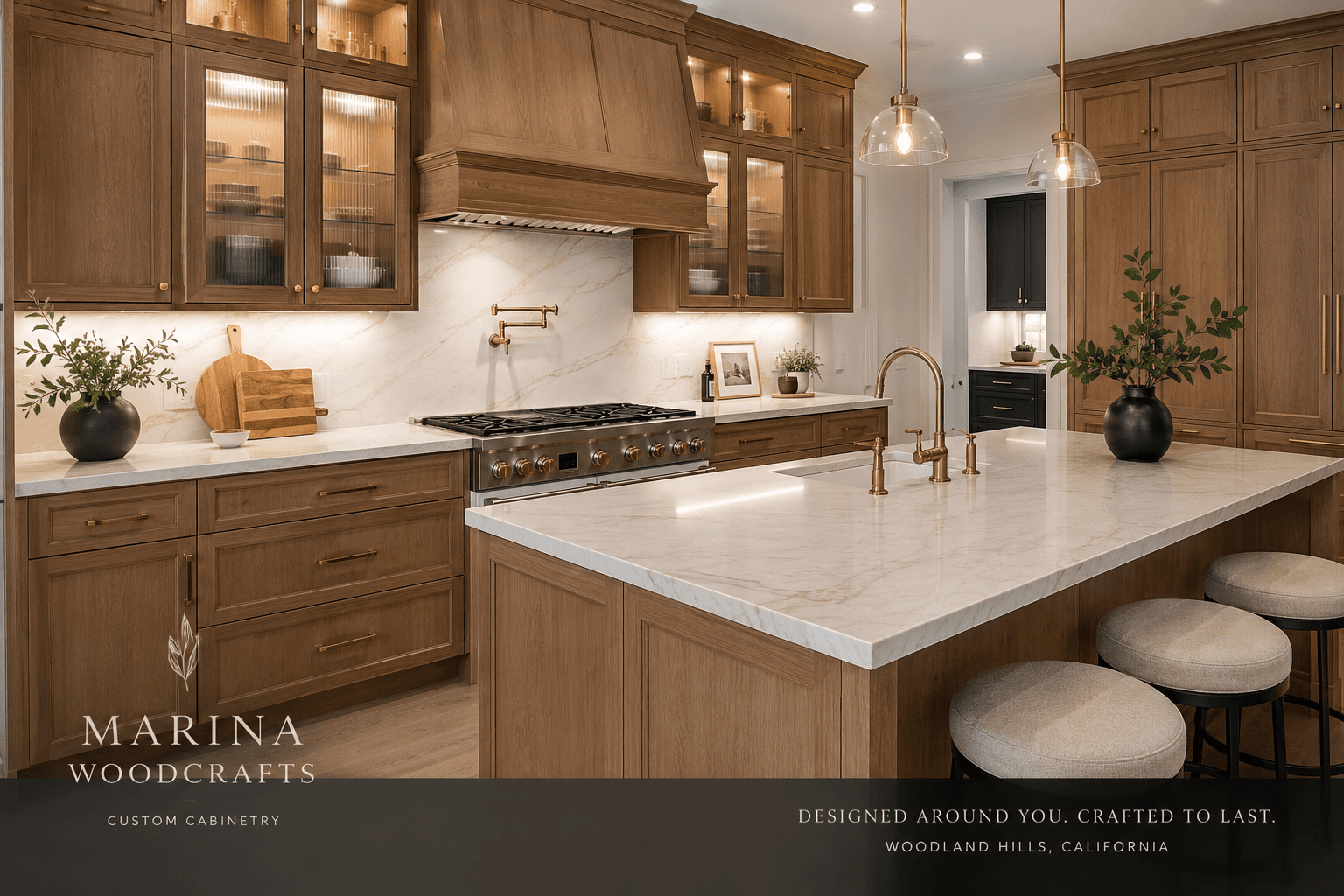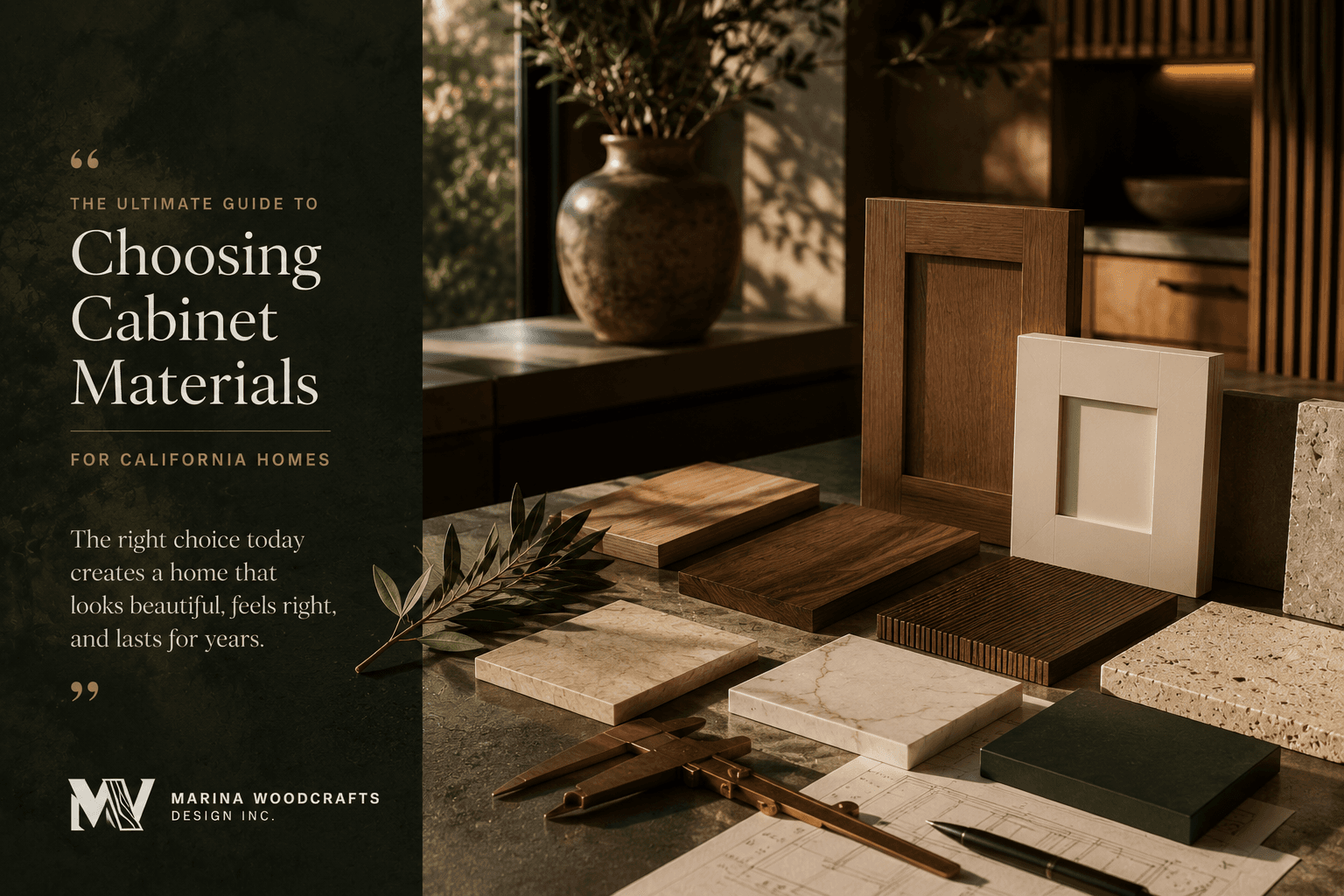
Ultimate Guide to Choosing Cabinet Materials for California Homes
Thoughtful cabinet materials can transform how your California home looks, feels, and lasts.
Choosing new cabinets should feel exciting, not overwhelming. Between the climate, your lifestyle, and all the material options available, it can be hard to know where to start. That's exactly why we put together this Ultimate Guide to Choosing Cabinet Materials for California Homes, based on what we see every day in Woodland Hills and across Southern California.
We work with homeowners who want cabinets that look beautiful now and still feel solid and reliable years down the road. In our experience, the right decision is almost never about choosing a single "best" product. Instead, it's about matching the materials to how you actually live, how much maintenance you're willing to take on, and how California's dry heat and occasional coastal influence will affect your space.
In this guide, we'll walk through the pros and cons of popular cabinet materials, explain how each performs in California homes, and highlight what to consider before you commit. By the end, you'll have a clear, practical understanding of what best fits your home instead of simply guessing from photos online.
How California's Climate Affects Your Cabinet Choices
Wood reacts to its surroundings. In California, that usually means strong sun, seasonal dryness, and, in some homes, a bit of coastal humidity. Those factors matter more than many people realize when planning a cabinetry installation.
We pay close attention to three things in particular:
1. Temperature swings between cool nights and warm days 2. Low indoor humidity caused by air conditioning and dry weather 3. Sun exposure, especially in bright kitchens and open-plan spaces
Solid wood and wood veneers naturally expand and contract with these changes. Engineered materials tend to be more stable, but not all are created equal. When we recommend options, we consider how each material will move, fade, or wear over time in your specific space, not just how it looks on day one.
Solid Wood Cabinets: Warm, Natural, and Timeless
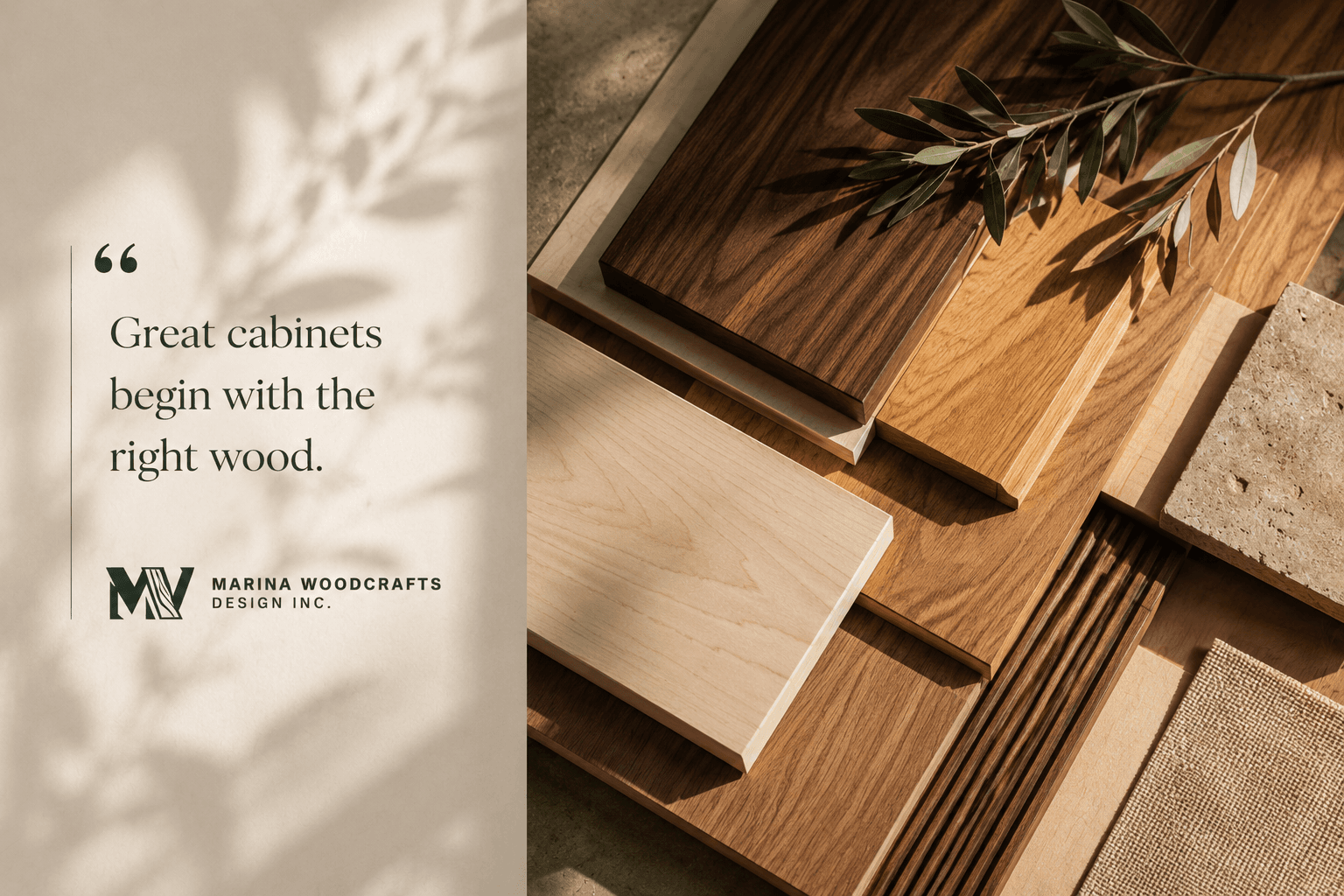
Many people come to us asking about the best wood for custom cabinets because nothing quite matches the feel of real wood. It has depth, character, and a warmth that works beautifully in California's natural light.
Advantages of Solid Wood
Solid wood can be a great fit when:
* You want a long-lasting, repairable material. * You love visible grain and natural variation. * You plan to refinish or change colors in the future.
With solid wood, dents and scratches can often be sanded and refinished rather than requiring replacement. That makes it especially appealing for busy family kitchens where life simply happens.
Things to Consider in California Homes
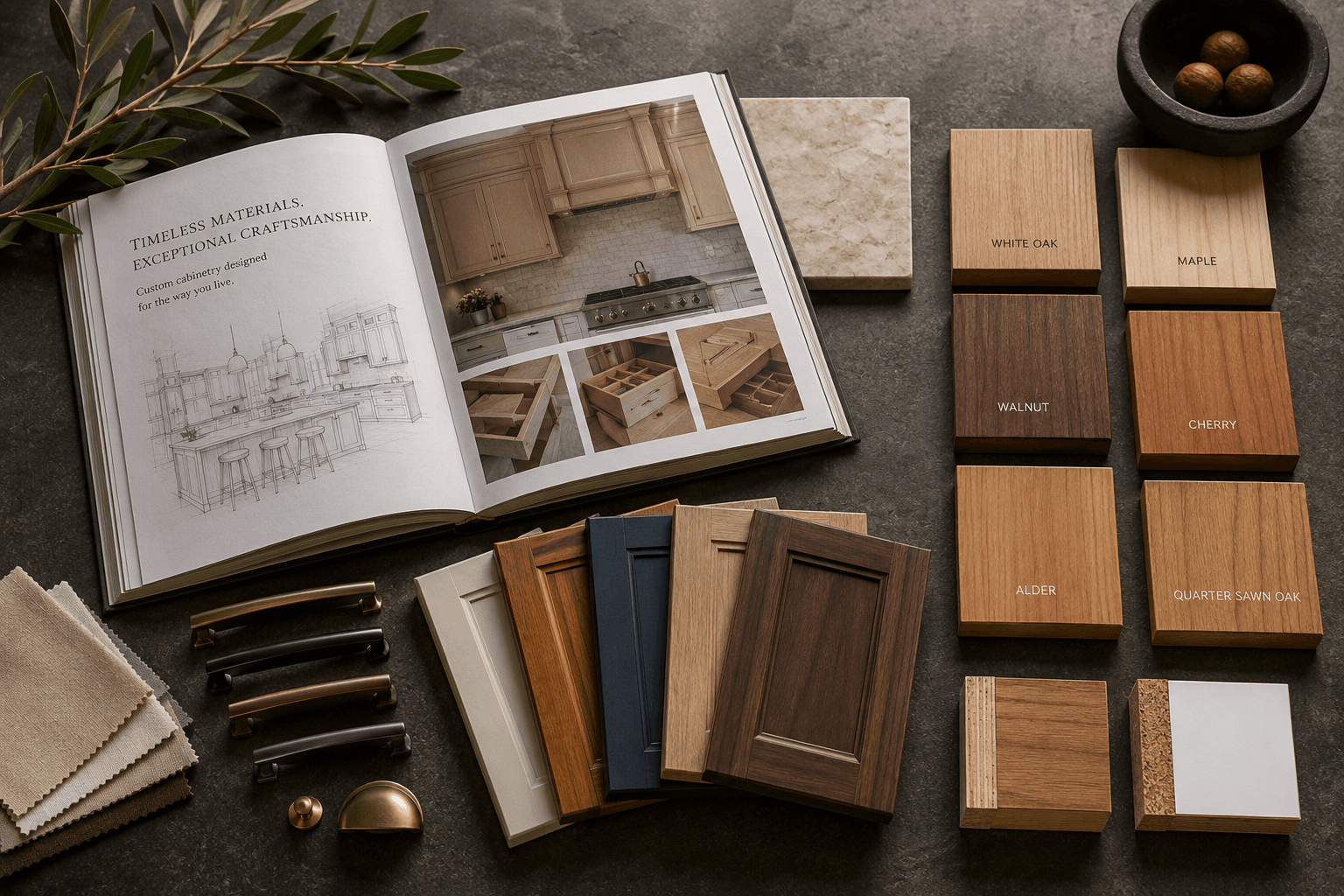
In our climate, certain wood species perform better than others. For example, hardwoods like maple and white oak tend to remain more stable than very soft or highly resinous woods. We also think carefully about placement. A solid wood door that receives direct afternoon sun may need a different finish or construction approach than one in a shaded pantry.
Solid wood is usually best for doors, drawer fronts, and select structural components. For larger surfaces, such as side panels, we often recommend pairing solid wood details with furniture-grade plywood to reduce warping and keep cabinetry installation more precise.
Plywood and Engineered Wood: Strength and Stability
High-quality plywood is one of our go-to choices for cabinet boxes and for panels that need to stay straight over time. It combines the look and feel of real wood with excellent stability.
Why We Like Furniture-Grade Plywood
Here is how we typically use and recommend engineered options:
* Plywood for cabinet boxes: strong, holds screws securely, and resists sagging. * Veneered plywood for large panels: provides the look of real wood while minimizing movement. * Engineered cores for areas where humidity or plumbing may be a concern.
Throughout this Ultimate Guide to Choosing Cabinet Materials for California Homes, you'll notice plywood is consistently mentioned as a backbone material. It works behind the scenes, keeping everything square, stable, and built to last.
The important detail is quality. Not all plywood is created equal. We look for thick veneers, tightly bonded layers, and low-void cores that can handle repeated opening and closing, along with the demands of everyday life.
MDF, Painted Finishes, and a Smooth Modern Look
If you love crisp, painted cabinets with no visible grain, medium-density fiberboard (MDF) often plays an important role. In many California homes, it's the go-to choice for certain door styles, especially modern and transitional designs.
MDF offers an exceptionally smooth surface that accepts paint beautifully. That means fewer visible joints and a clean, consistent finish. In California homes, where natural light can highlight even minor surface imperfections, that's a significant advantage.
We usually recommend MDF for:
* Painted Shaker or flat-panel doors. * Decorative panels that require perfectly smooth surfaces. * Detailed profiles where wood grain could telegraph through the paint.
Because MDF is more sensitive to standing water, we pay close attention to placement and sealing, especially around sinks and dishwashers. When installed and protected correctly, it holds up very well and delivers the clean, gallery-like painted finish many homeowners want.
Laminates and Thermofoil: Practical, Low-Maintenance Choices
Not everyone wants to spend time worrying about cabinet maintenance. Many of our clients ask for surfaces they can simply wipe clean without needing extra care. That's where high-quality laminates and thermofoil come into the conversation.
In the context of this Ultimate Guide to Choosing Cabinet Materials for California Homes, these materials are often recommended for:
* Rental units or secondary spaces where durability is the priority. * Garage or laundry room cabinetry exposed to moisture and heavy use. * Modern designs featuring bold colors or highly consistent patterns.
Quality laminates can resist stains, fingerprints, and scratches better than many painted finishes. Thermofoil doors provide a seamless, wrapped appearance that is easy to clean. We are also honest about the trade-offs. They can be more difficult to repair if damaged, and direct heat near ovens should always be taken into consideration.
Matching Materials to Your Lifestyle
The most important step is matching cabinet materials to the way you actually live. Before we begin any cabinetry installation, we usually walk through a few simple questions with you:
* How much daily wear do your kitchen or bathroom surfaces experience? * Do you think you'll want to refinish or change colors in the future? * How much direct sunlight does the room receive, and at what times of day? * Do you prefer a natural, textured appearance or a smooth, painted finish? * Are you comfortable with gentle aging, or would you rather your cabinets maintain a like-new appearance for as long as possible?
Once we have those answers, choosing the best wood for custom cabinets—or deciding between painted MDF and wood veneer—becomes much more straightforward. It stops being about what's "right" in general and becomes about what's right for your home.
Putting It All Together: A Simple Material Strategy
To make this more concrete, here's a material combination we commonly recommend for California homes:
1. Use solid hardwood for doors and drawer fronts when you want visible grain and long-term refinishing options. 2. Pair those with furniture-grade plywood cabinet boxes for strength and dimensional stability. 3. Choose MDF or plywood cores for painted doors, depending on the design and budget. 4. Reserve laminates or thermofoil for specialized spaces or when low maintenance is the highest priority. 5. Finish everything with coatings and hardware selected for your home's lighting, humidity, and everyday use.
This layered approach allows each material to do what it does best instead of asking a single product to handle every job.
Planning a project in Woodland Hills or the greater Los Angeles area?
Request a Free Consultation