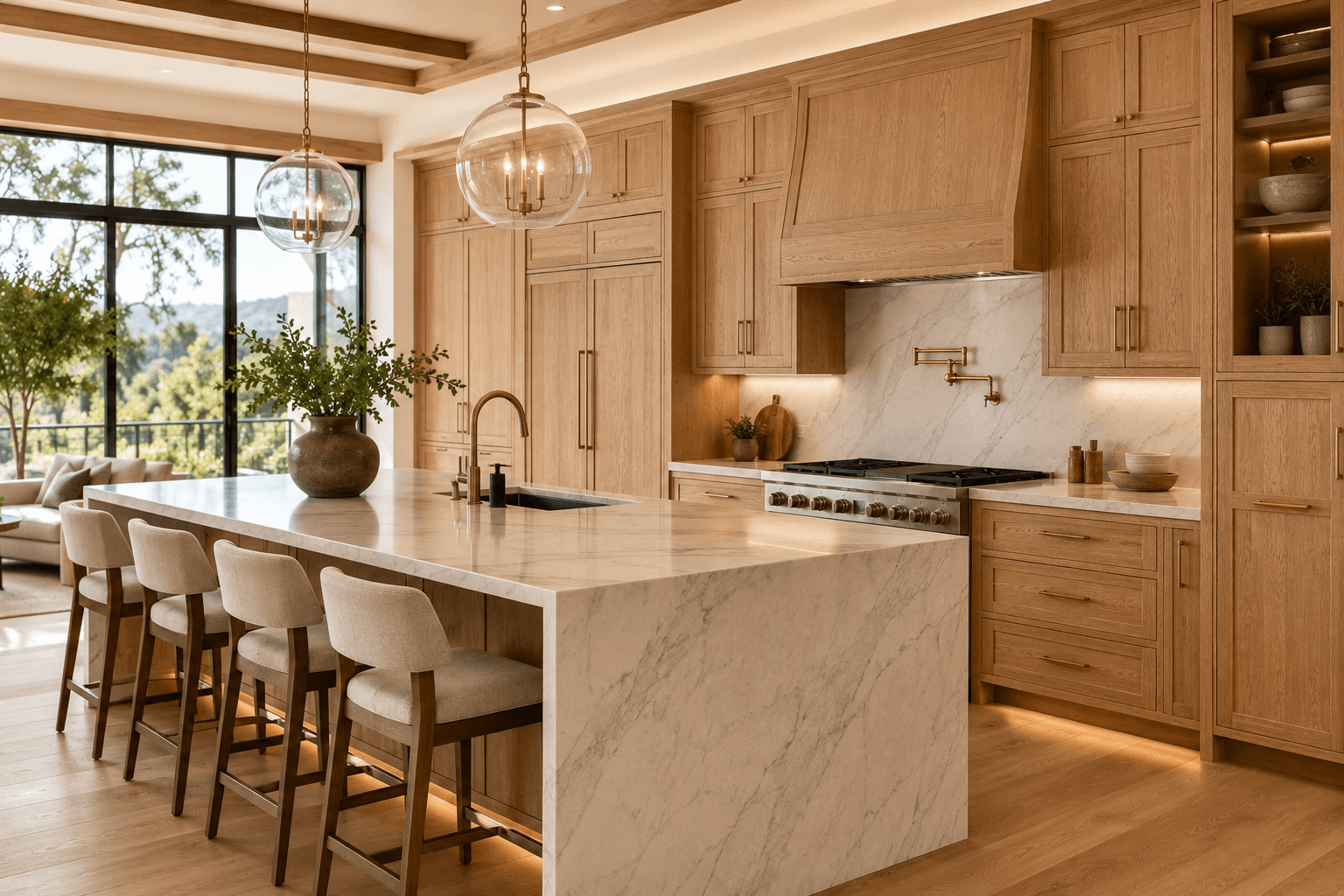
Best Wood for Kitchen Cabinets: Maple vs Oak Plywood vs Particle Board & Cabinet Construction Guide California
Choosing the right cabinet wood in California comes down to how you live in your kitchen every single day.
When you start planning a new kitchen, picking finishes like counters and backsplash is usually the fun part. Then the big question hits: what is actually the Best Wood for Kitchen Cabinets: Maple vs Oak Plywood vs Particle Board & Cabinet Construction Guide California trying to solve for you in real life? In other words, what combination of wood species and cabinet box material will hold up to your lifestyle, your budget, and the California climate.
We spend a lot of time walking homeowners through this decision in Woodland Hills. You might come in thinking, “I just want white shaker cabinets,” but the real conversation quickly becomes about maple vs oak, plywood vs particle board cabinets, durability, and how much movement in the wood you are comfortable with over time.
In this guide, we will break down how maple and oak behave, how plywood and particle board perform, and how we think through kitchen cabinet cost comparison with our clients so you can make clear, confident choices.
Maple vs Oak: How Each Wood Actually Looks and Lives
Maple cabinets: smooth, clean, and great for paint
Maple is a dense, fine-grained hardwood. When you run your hand over a maple door, it feels smooth and almost creamy, with very little visible grain pattern. That makes it ideal if you want:
- A modern, clean look - Subtle, uniform stain colors - Painted cabinets that look crisp and even
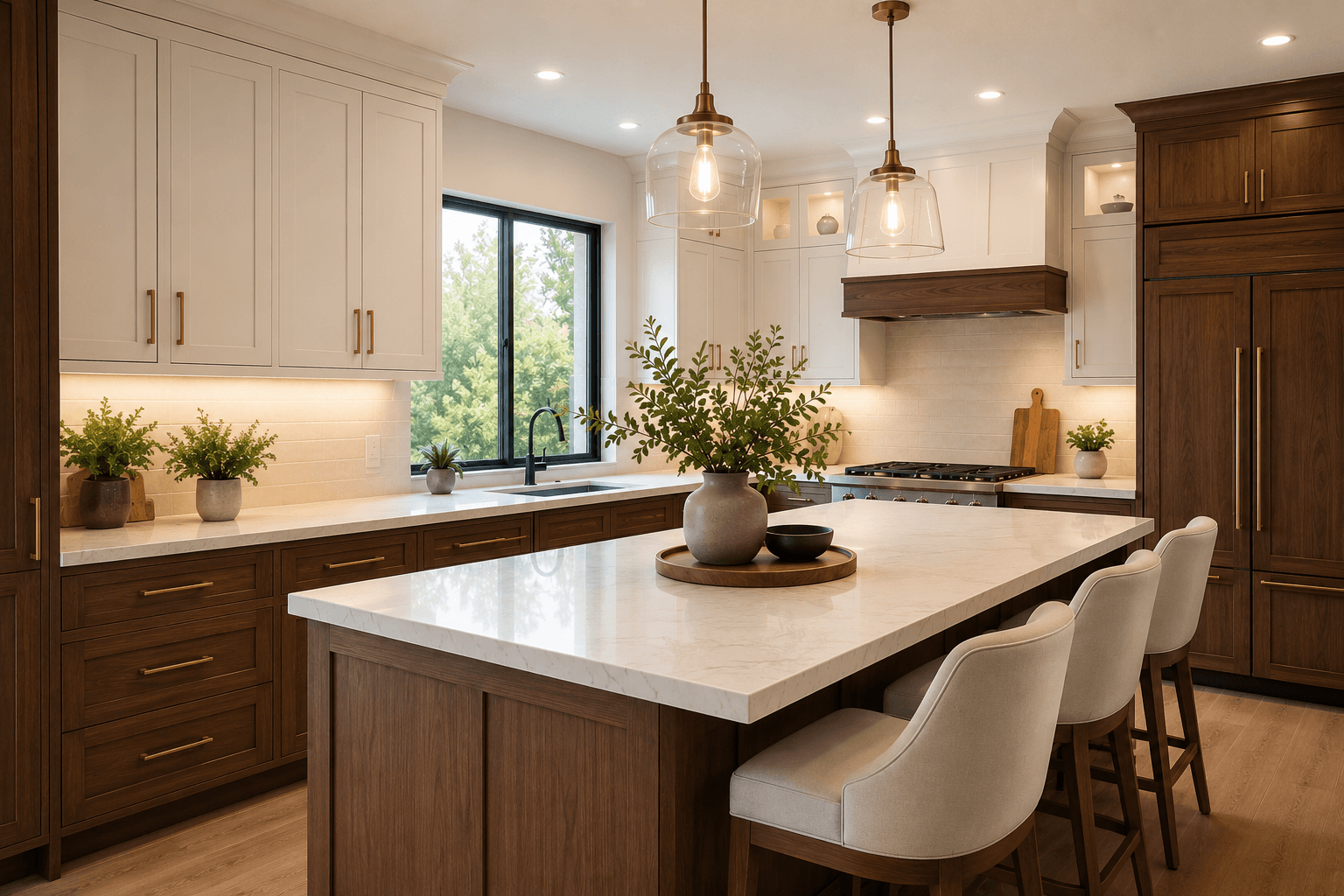
Because maple has a tight grain, paint lays down beautifully. If you are dreaming of white, soft gray, or a rich painted color, maple is usually what we recommend for doors and drawer fronts. It resists denting pretty well and works nicely in busy California kitchens where there is a lot of traffic and kids or guests moving through constantly.
The tradeoff is that maple can show small nicks more clearly on very smooth, painted surfaces. We always talk honestly about this: you get a refined look, but you may want to be a little more mindful about hard impacts around the island and lower doors.
Oak cabinets: visible grain, character, and warmth
Oak is also a hardwood, but with a very different personality. It has a pronounced, open grain that adds texture and visual interest. When you look closely, you will see:
- Strong grain lines and natural variation - A sense of movement and “character” in each panel - Stain colors that highlight the grain instead of hiding it
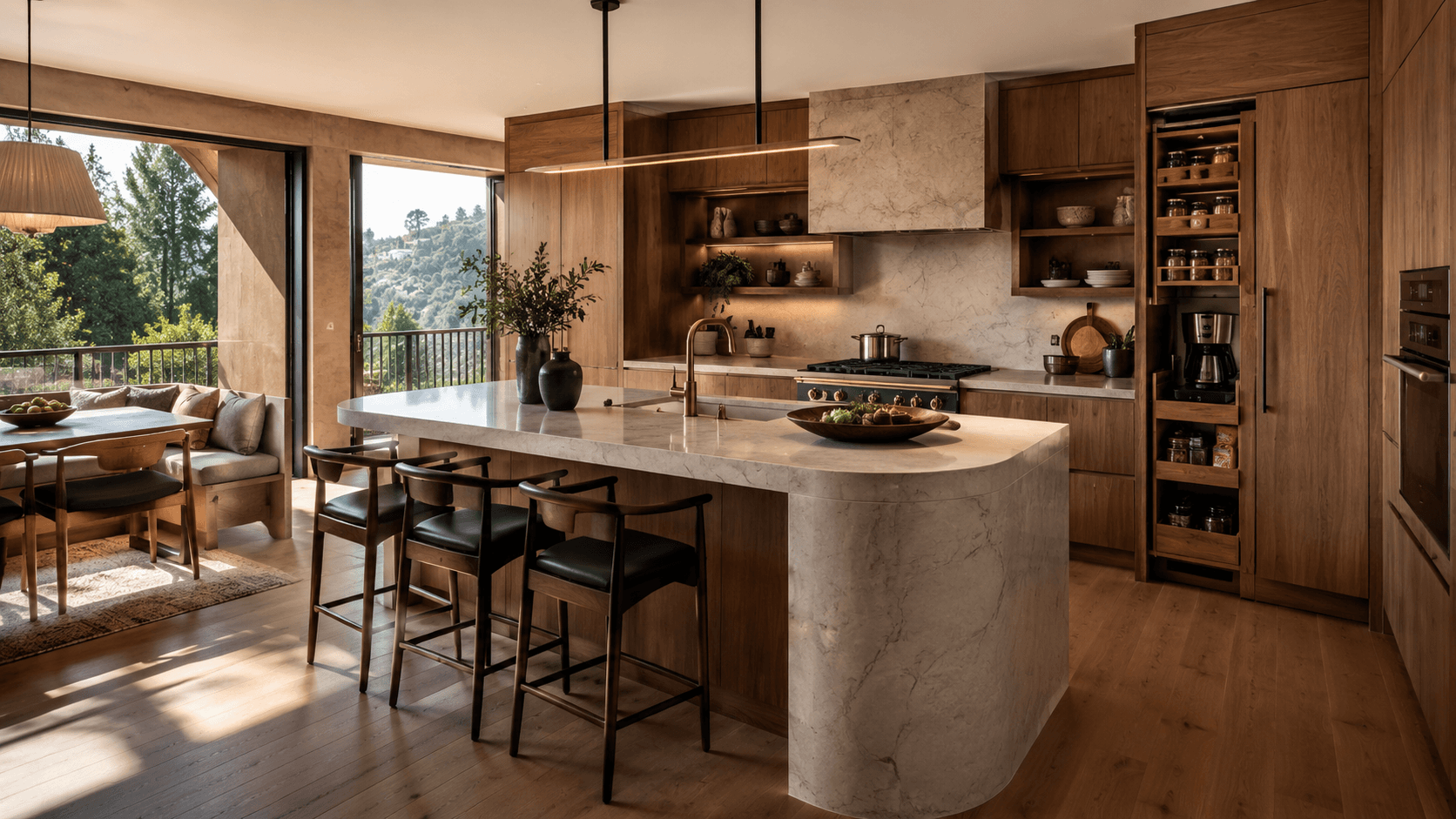
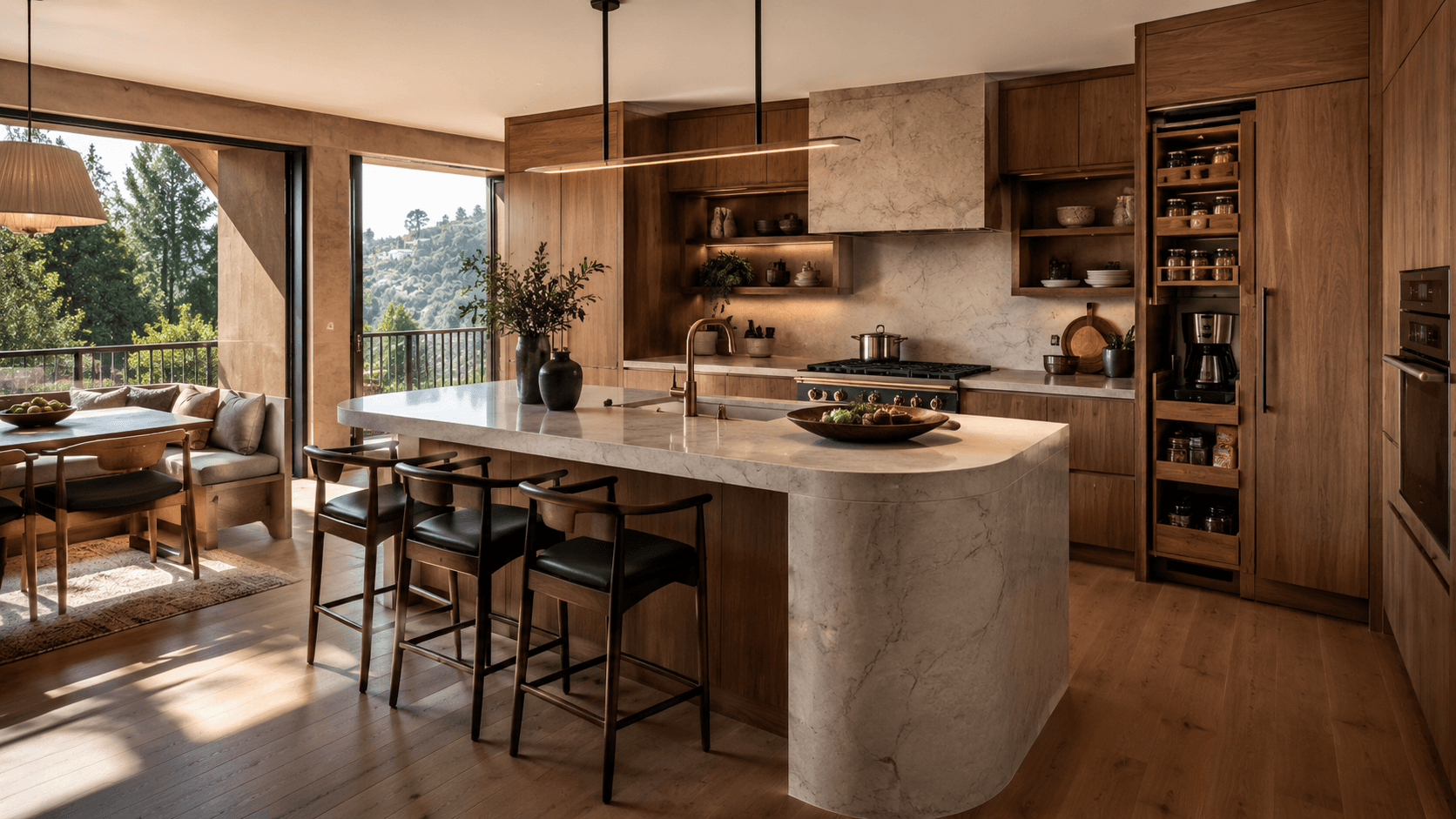
For clients who like a more natural, organic feel, we often recommend oak. It pairs well with California casual, coastal, and modern-farmhouse styles. Even in a contemporary kitchen, flat panel oak with a light stain can feel warm without looking old-fashioned.
Oak grain also tends to disguise small dings and everyday wear better than a super-smooth painted finish. If you know your kitchen will see heavy use, oak can be a forgiving choice both visually and structurally.
California Climate: How Maple and Oak Respond
Wood is always responding to its environment, and the Best Wood for Kitchen Cabinets: Maple vs Oak Plywood vs Particle Board & Cabinet Construction Guide California needs to consider our local conditions.
In Woodland Hills and across Southern California, we see:
- Dry periods with low humidity - Occasional seasonal swings - Strong sunlight in many kitchens
Both maple and oak are stable hardwoods when properly finished and installed. The main differences we talk about are:
- Sunlight: Painted maple can gradually shift color in strong UV exposure; stained oak tends to age more softly, with the grain still taking center stage. - Movement: Any solid wood door can move slightly with humidity changes. Stained oak hides micro-movement better visually; painted maple doors may show hairline lines at joints over many years if conditions fluctuate a lot.
We plan cabinet layouts and finishes with these realities in mind, especially around big windows and sliding doors that pour light into the space.
Cabinet Boxes: Plywood vs Particle Board Explained
Choosing door wood is only half the story. What you do not see as much, but use every day, is the cabinet box itself. This is where plywood vs particle board cabinets becomes a key decision.
Plywood cabinet boxes
Plywood is made from thin layers of wood veneer glued together with the grain alternating directions. For kitchen use, that usually means:
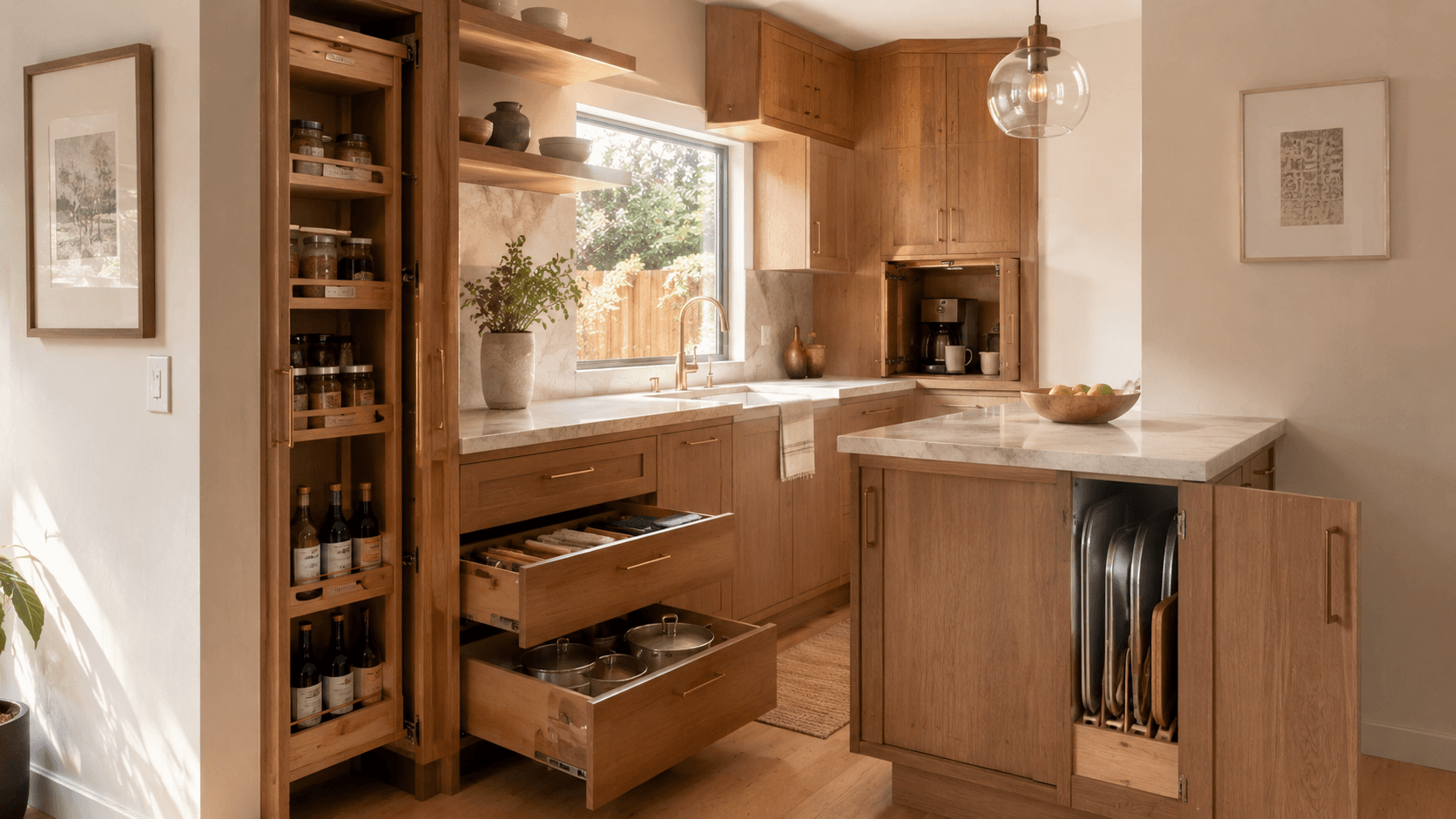
- Strong resistance to sagging under heavy loads - Better screw-holding strength for hinges and drawer slides - Improved performance in areas with occasional moisture
We typically recommend plywood boxes for:
- Sink bases and areas near dishwashers - Larger pantry cabinets - Clients who plan to stay in the home long-term and want maximum durability
It often costs more, but in many kitchen cabinet cost comparison discussions, clients decide the upgrade is worth it for peace of mind and long-term performance.
Particle board cabinet boxes
Particle board is made from wood particles and resin pressed into panels. Not all particle board is the same; higher-density panels used in quality cabinets can perform quite well when properly sealed and installed.
Benefits can include:
- Lower material cost compared to plywood - A very smooth surface for laminates or melamine interiors - Consistent, flat panels that work well with modern design
The main consideration is moisture. Particle board does not like long-term water exposure. We talk through placement, plumbing, and your habits (for example, do you often leave wet items in cabinets) before recommending it in certain areas.
Matching Materials to Your Budget and Priorities
When we sit down for a kitchen cabinet cost comparison, we usually look at three main levers:
1. Door and drawer front material (maple vs oak, stained vs painted) 2. Cabinet box construction (plywood vs particle board cabinets or a mix) 3. Interior upgrades and hardware choices
A practical approach many homeowners choose is:
- Hardwood doors (maple or oak) for beauty and longevity - Plywood boxes in wet or heavy-use zones - High-quality particle board boxes in upper or less critical areas to balance cost
This hybrid route lets you invest where it matters most without pushing the entire project out of budget. It still aligns with the idea of the Best Wood for Kitchen Cabinets: Maple vs Oak Plywood vs Particle Board & Cabinet Construction Guide California because it treats your kitchen as a whole system, not a single material choice.
How We Help You Decide Step by Step
To make these choices feel less overwhelming, we usually move through a simple process together:
1. Start with style We look at images and samples to see if you are drawn to smooth, clean fronts (often maple) or visible grain and texture (often oak).
2. Talk about lifestyle We ask how many cooks use the kitchen, how often you entertain, and whether kids, pets, or multigenerational family live with you.
3. Walk through climate and light We look at your actual space, windows, and appliances and talk about how light and moisture will affect different woods and finishes.
4. Review budget range With a clear budget, we compare cabinet box options, explaining where plywood really earns its keep and where quality particle board may be perfectly fine.
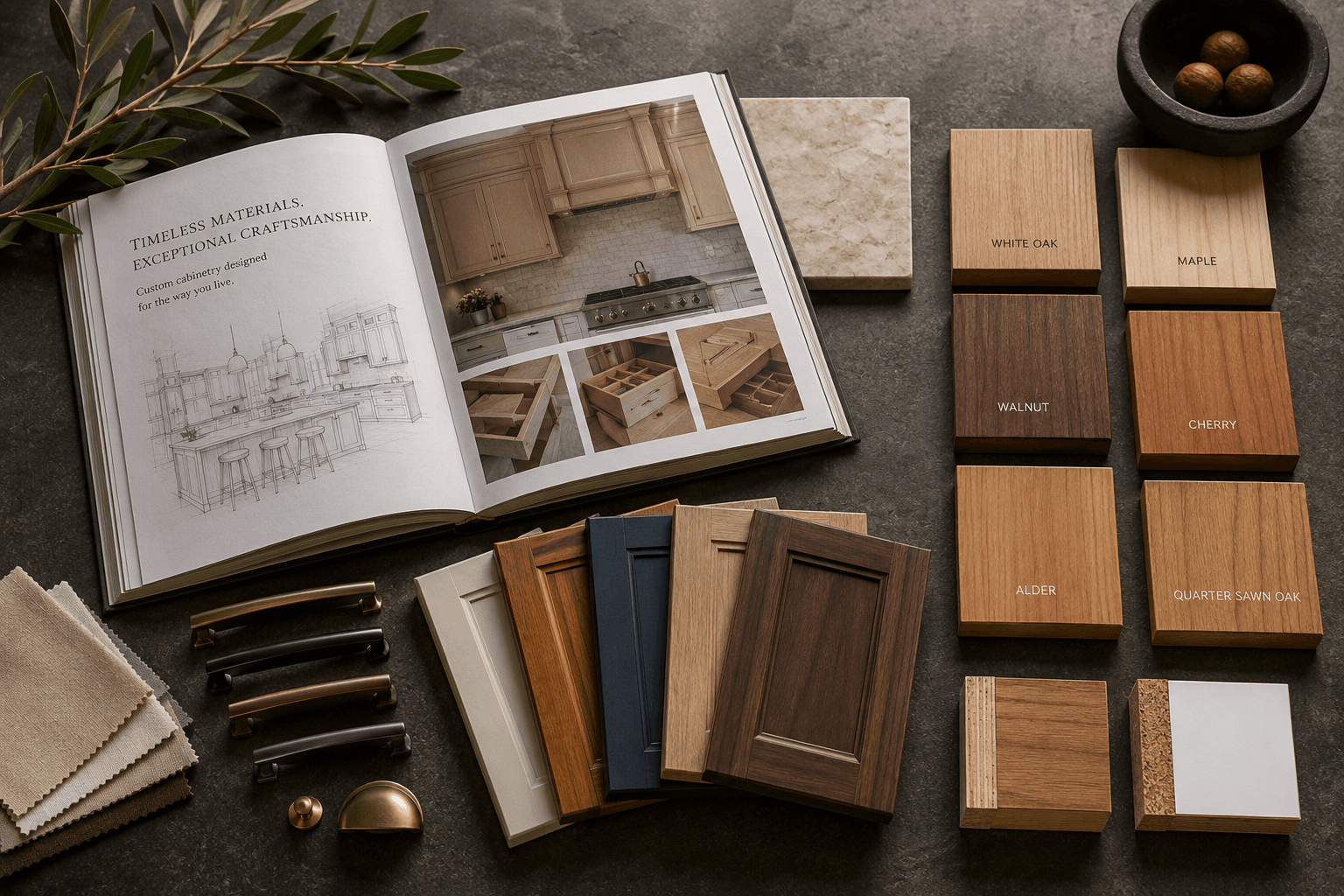
5. Finalize samples You see and feel actual door samples and cabinet interior options, so the decision is not just theoretical. This is often the moment when everything clicks.
By the end, the choice between maple vs oak and plywood vs particle board cabinets becomes much more about what feels right for how you live, not just what looks good in a photo.
Putting It All Together in Your California Kitchen
In the end, the Best Wood for Kitchen Cabinets: Maple vs Oak Plywood vs Particle Board & Cabinet Construction Guide California is as much about priorities as it is about materials. Maple offers that smooth, refined canvas, especially for painted finishes. Oak brings warmth, grain, and character that ages gracefully. Plywood offers strength and moisture resistance, while high-quality particle board can help keep your project on budget without sacrificing everyday function.
We like to think of your kitchen as a working space with a personality: it needs to look the way you imagine when you walk in each morning, but also stand up to hot pans, spills, and busy weeks without complaint. When those elements are in balance, the cabinetry feels like it truly belongs to your home and your lifestyle.
Ready to Begin
At Marina Woodcrafts Design Inc., we combine wood species, cabinet construction, and layout planning so your kitchen feels beautiful on day one and still solid years down the road. Our goal is to translate all the technical details about maple vs oak and plywood vs particle board into clear choices that match how you actually live in your Woodland Hills home.
If you are thinking about a remodel or a new build, we are here to walk through samples with you, compare options in a straightforward way, and design cabinetry that makes sense for your space, budget, and long-term plans.
Gentle Calls to Explore Next Steps
If you would like to get a feel for our approach and see examples of our cabinetry work, you can browse the website at https://www.marinawoodcrafts.com/ and start imagining what might suit your own kitchen.
When you are ready to talk through ideas or ask specific questions about wood choices and cabinet construction, you can reach us through the contact page at https://www.marinawoodcrafts.com/contact and we will follow up personally.
If you prefer to learn a bit more about who we are before reaching out, you can visit the about section at https://www.marinawoodcrafts.com/about and see how Marina Woodcrafts Design Inc. approaches custom cabinetry in Woodland Hills.
Planning a project in Woodland Hills or the greater Los Angeles area?
Request a Free Consultation