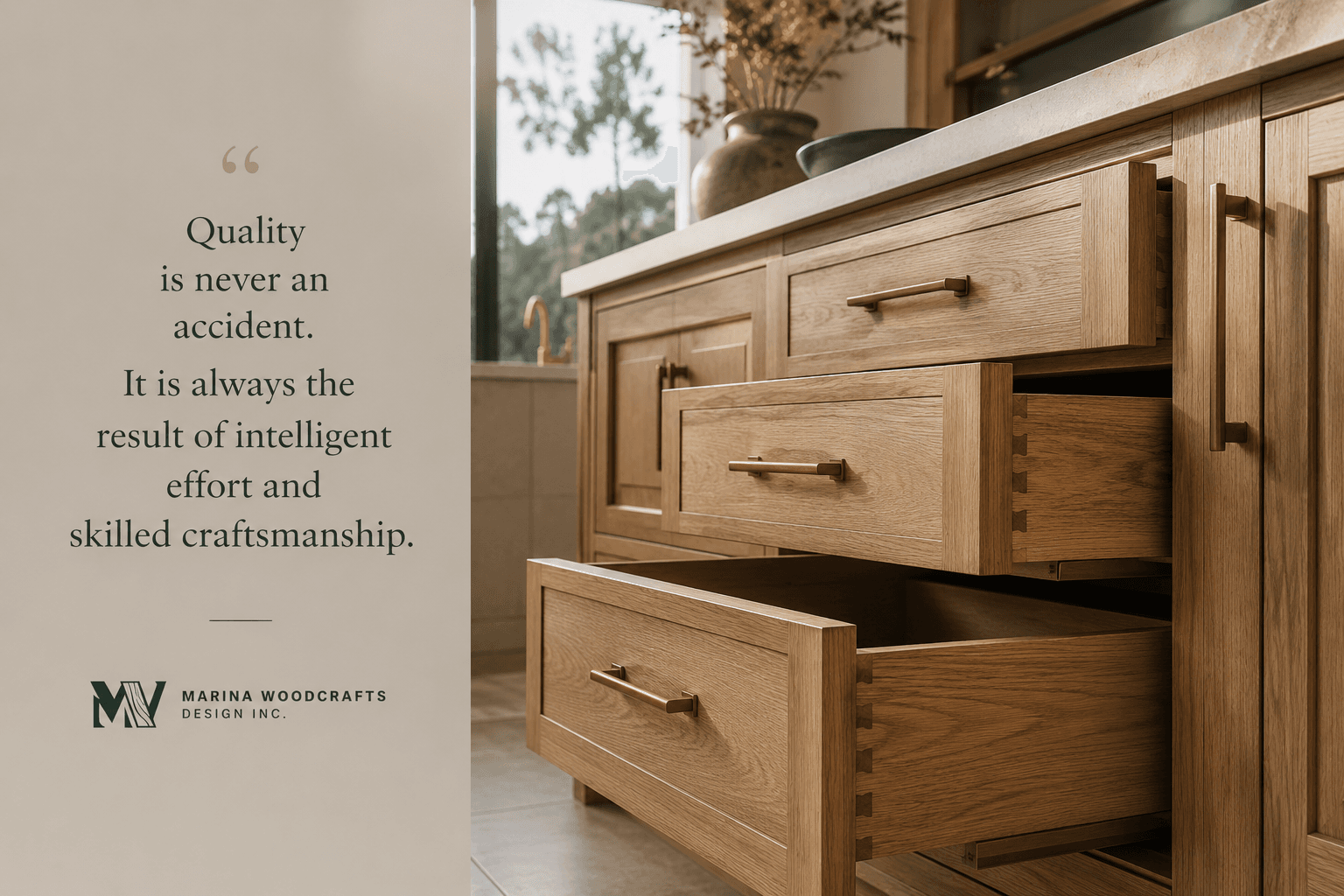
Understanding what drives the real cost of custom kitchen cabinets helps you plan confidently instead of guessing and hoping for the best.
When you start planning a kitchen remodel, the question that usually comes first is cost. How much do custom kitchen cabinets cost in Woodland Hills & Los Angeles in 2026? Complete Pricing Guide-style information is exactly what most homeowners wish they had before they even call a designer or contractor. Cabinets are often the biggest single investment in a kitchen, so getting a clear picture of pricing is not just helpful, it is essential.
We work with homeowners every week who come to us with screenshots, Pinterest boards, and a rough budget in mind, but not much clarity on what those numbers actually buy. That is completely normal. Cabinet pricing can feel confusing because it is affected by materials, layout, finishes, hardware, and installation details that you do not really see in glossy photos. Our goal here is to pull back the curtain a bit and talk plainly about real-world numbers in Woodland Hills and the wider Los Angeles area in 2026.
In this guide, we will walk through typical price ranges you can expect, what drives those costs up or down, and how choices like custom wood furniture California-style built-ins or specialty storage affect your final investment. We will also talk about how we usually structure projects so you can see where your money actually goes.
Typical 2026 Price Ranges for Custom Kitchen Cabinets in Woodland Hills
Let us start with the question that is probably on your mind. How much do custom kitchen cabinets cost in Woodland Hills & Los Angeles in 2026? Complete Pricing Guide breakdowns will vary from project to project, but here are realistic ranges we see for full custom cabinet packages, not including appliances or major structural work.
For an average kitchen (about 12 by 15 feet) with a standard L-shaped or U-shaped layout:
* Entry-level custom: Around $18,000 to $28,000 * Mid-range custom: Around $28,000 to $45,000 * High-end custom: Around $45,000 to $80,000+
Those numbers include design, cabinet fabrication, and professional installation, but not countertops, flooring, or electrical and plumbing changes. Smaller galley kitchens may fall a bit below those numbers, while large open-plan kitchens with big islands, tall ceilings, or a butler's pantry can easily go beyond the top of the range.
If you are thinking about a kitchen plus additional built-ins, like a custom wood furniture California-style breakfast nook or a wall of storage for a family room that connects to the kitchen, then the overall budget will grow to match the additional cabinetry and carpentry.
What Actually Drives Cabinet Cost Up or Down
Cabinets are not just boxes with doors. The price you pay in Woodland Hills or Los Angeles in 2026 reflects a bundle of decisions layered on top of each other. The main factors are:
1. Size and Complexity of the Layout
The more linear feet of cabinetry, the higher the cost. A compact L-shaped kitchen with standard-height wall cabinets is one thing. Add a large island, floor-to-ceiling pantry cabinets, and a wall of tall units around a built-in fridge, and you are in a different price tier.
Complex features like angled corners, appliance panels, integrated seating, and custom wine or display units add both design time and fabrication steps. In pricing terms, a simple shape with clean lines will nearly always be more budget-friendly than a layout with lots of level changes, curves, and built-ins wrapping around architectural elements.
2. Cabinet Construction Quality
Construction choices affect both feel and longevity. For 2026 in our area, you can expect:
* Cabinet boxes built from high-quality plywood to cost more than basic particle board, but they hold up much better to years of humidity, weight, and daily use. * Full custom face-frame or frameless construction with tight tolerances to cost more than semi-custom or stock solutions, but the fit and finish in your actual space will be noticeably better. * Solid hardwood face frames and doors to carry a premium over thin veneers or low-quality imports, yet they give your kitchen that substantial, grounded feeling you can literally feel when you open a door.
When we talk through options, we usually explain how construction choices affect not only the upfront price but also how often you might need repairs or replacements in the future.
3. Door Style and Design Details
Door style is a surprisingly big driver of price. A flat slab door in a simple painted finish is more affordable than an intricate raised-panel door with multiple profiles. In 2026, some of the most requested styles in Woodland Hills and the Los Angeles area include:
* Clean-lined shaker doors * Slab doors with subtle wood grain * Narrow-rail shaker or modernized traditional profiles
More profiling and more parts equal more labor. Decorative details like applied moldings, beaded insets, and elaborate crown molding or light rails also raise the cost because they require extra steps in fabrication and finishing.
4. Materials and Species Choices
How much do custom kitchen cabinets cost in Woodland Hills & Los Angeles in 2026? Complete Pricing Guide answers always need to include wood species. Material choice can move your budget significantly up or down.
Common options include:
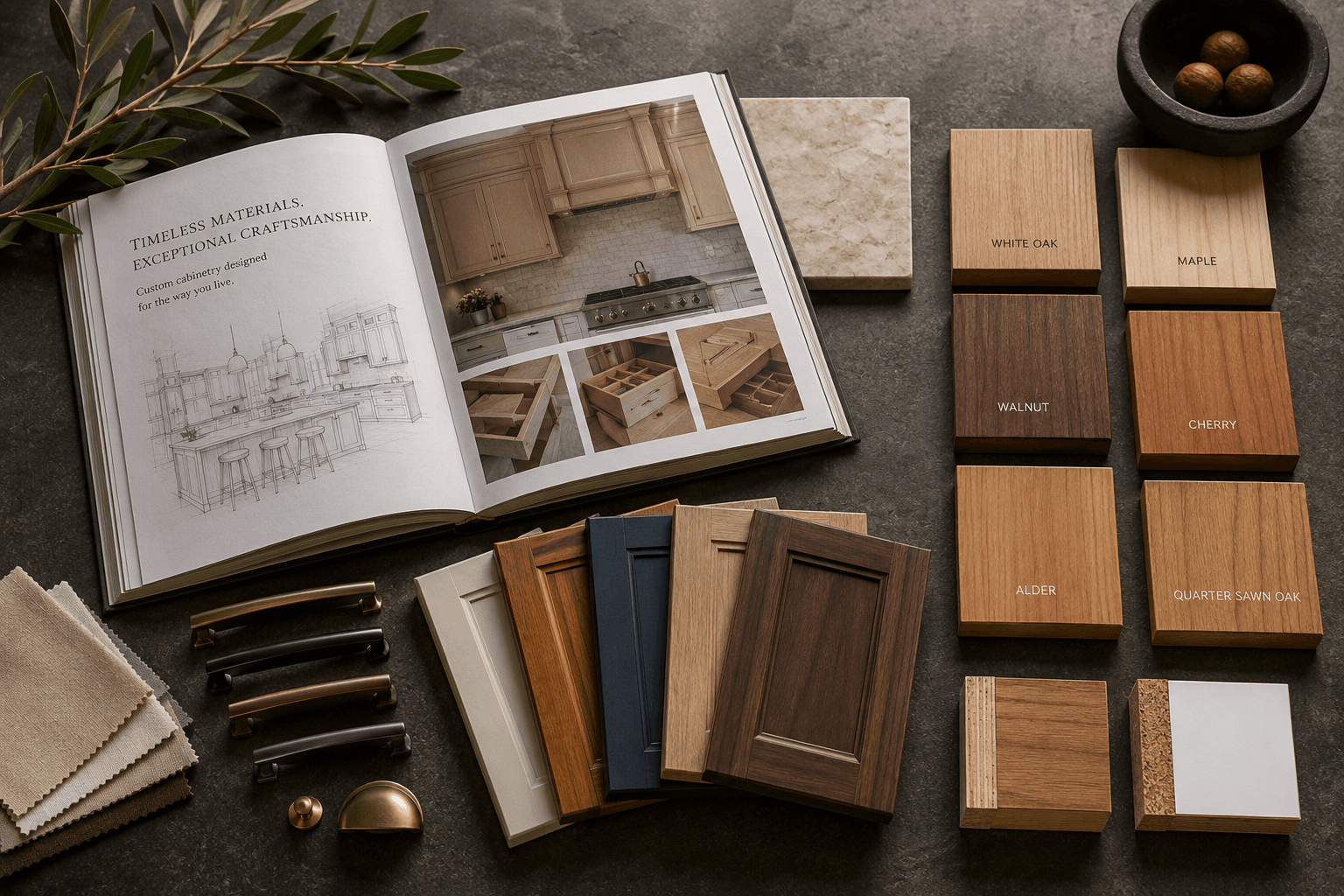
* Maple or birch for painted finishes, which offer a smooth, stable surface and a mid-range cost. * Oak or ash for visible wood grain, often at a similar or slightly higher price point depending on grade. * Walnut, cherry, or white oak for a warm, natural wood look, usually higher in cost but very popular in custom wood furniture California projects and high-end kitchens.
If you love the look of a particular species, we will typically show you how that choice affects the cabinet portion of your budget so you can weigh it against other priorities like appliances or countertops.
5. Finish Type and Color
Finishes are another key cost factor:
Standard single-color paints or clear stains are the most economical.
Specialty finishes, such as multi-step stains, hand-rubbed treatments, glazing, or distressed looks, add time and material costs.
Darker or highly pigmented colors sometimes require more coats and preparation to achieve a smooth, consistent result.
In a bright Woodland Hills kitchen with lots of natural light, a lighter finish can make the space feel open while also being more forgiving in terms of fingerprints and dust. We tend to walk clients through not only the cost differences but also how finishes behave in everyday life.
6. Hardware and Accessories
You use hardware every day, so even though it seems minor compared to the cabinet boxes, it plays a big role in both your budget and your experience. Some common choices include:
Soft-close hinges and drawer slides are now the standard expectation, but higher-quality brands still carry a slight premium over basic hardware.
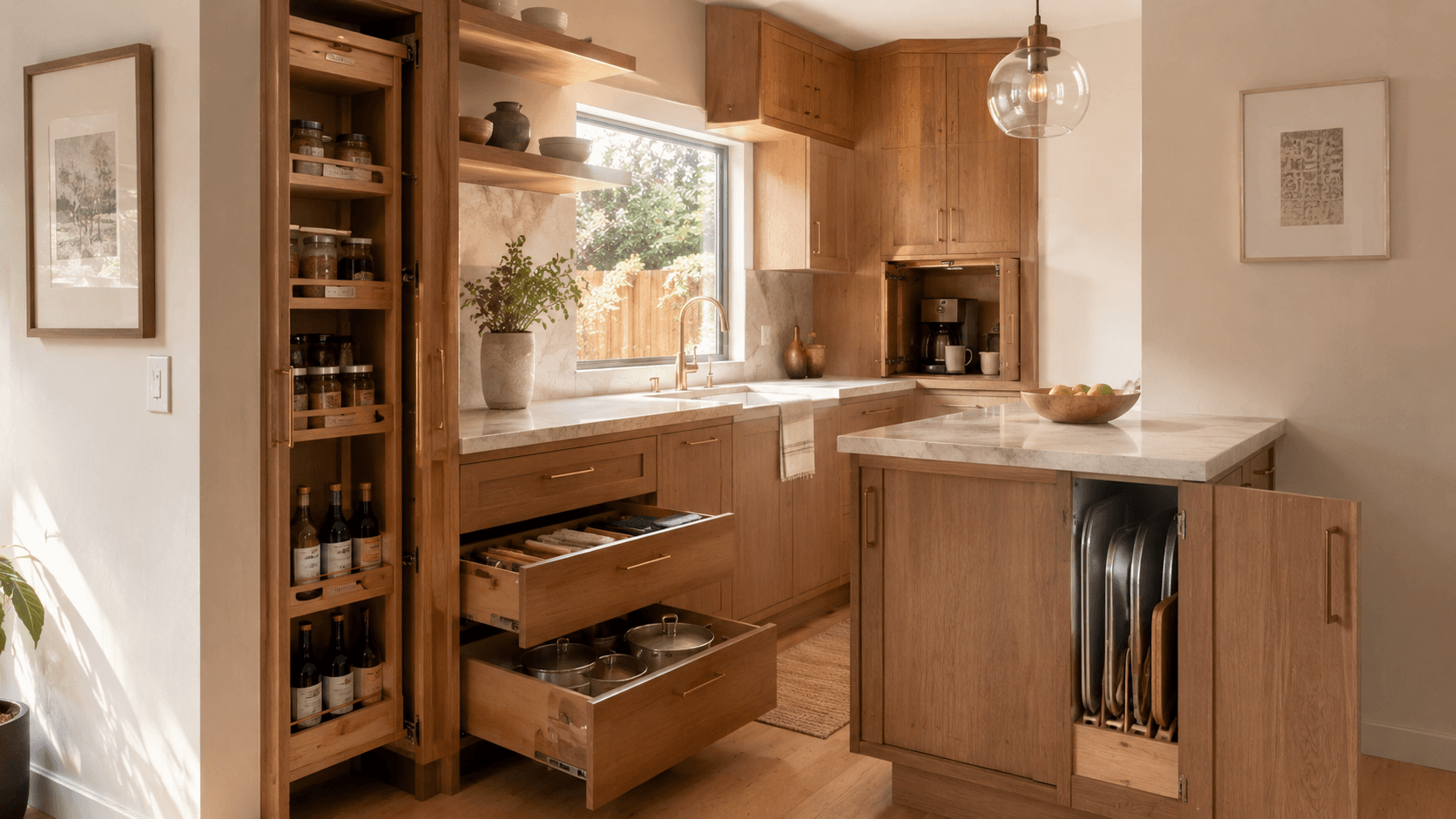
Pull-out trash systems, spice pullouts, tray dividers, lazy Susans, and custom drawer inserts all add cost, but they also add real, usable space.
Decorative handles and knobs range from very budget-friendly to quite high-end, especially if you choose solid brass or designer lines.
We usually create a hardware and accessories list that lets you see, item by item, how these choices affect the total.
How We Typically Break Down a Custom Cabinet Budget
To make sense of cabinet costs for a Woodland Hills or Los Angeles kitchen in 2026, it can help to think in terms of percentages. While every project is unique, a typical breakdown for a fully custom kitchen might look something like this:
1. Design and planning: Around 10 to 15 percent
2. Cabinet box construction: Around 25 to 35 percent
3. Doors, drawer fronts, and face frames: Around 20 to 30 percent
4. Finishing (paint or stain): Around 15 to 20 percent
5. Hardware and interior accessories: Around 10 to 15 percent
6. Installation and site work: Around 10 to 15 percent
Those numbers are not strict rules, but they give you a rough sense of where your cabinet dollars go. When we discuss *How Much Do Custom Kitchen Cabinets Cost in Woodland Hills & Los Angeles in 2026? Complete Pricing Guide* style conversations, we often walk through this breakdown so you can decide where to invest more and where you are comfortable simplifying.
Custom vs. Semi-Custom vs. Stock in 2026
Even though we focus on custom work, it is useful to understand how custom compares to other options. In 2026, the main differences you will notice are:
Custom gives you exact sizing. That means less wasted or filler space, better alignment with windows, beams, and existing walls, and the ability to fine-tune heights and depths.
Custom lets you choose any finish, door style, and storage configuration you want instead of being limited to a set catalog.
Custom also tends to use higher-quality materials and joinery. In the short term, that feels like a luxury. In the long term, it often means fewer problems with sagging, chipping, or doors that do not quite close properly.
In Woodland Hills and Los Angeles, a full set of mid- to upper-range semi-custom cabinets can sometimes look similar in price to a more streamlined custom package. The difference is in the details and in how perfectly the cabinetry fits your space.
Budgeting Tips for Your 2026 Kitchen Project
Putting actual numbers on paper can be stressful, but it does not have to be. A few practical steps tend to make the whole process smoother.
Here are some ways we encourage clients to think about their budgets:
Define your must-haves first. For example, maybe you know you want an island with seating, a hidden trash pullout, and tall pantry storage. We design and price those priorities first, then explore optional extras.
Separate your cabinet budget from your overall kitchen budget. If your total kitchen budget is, say, 80,000, you might plan roughly 35 to 45 percent of that for cabinetry, depending on how high-end you want to go.
Decide whether you want your cabinets to be the star or the backdrop. If you love bold stone countertops or statement appliances, you might choose a simpler, slightly more economical cabinet style to maintain balance.
Leave room for contingencies. In any renovation, unexpected issues can arise once walls are opened. Keeping a bit of cushion gives you peace of mind.
We are always realistic in conversations about how much custom kitchen cabinets cost in Woodland Hills and Los Angeles in 2026. Complete pricing guide discussions only help if they are honest, so we prefer to give you realistic ranges early rather than lowball estimates that creep up later.
How Custom Cabinets Connect With Other Custom Wood Furniture
Many homeowners who come to us for kitchens are also thinking beyond cabinets. Custom wood furniture, California-style pieces, such as built-in benches, media units, or a matching dining table, can tie the whole home together.
Some common combinations we see include:
A kitchen island and a custom dining table that share the same wood species and finish.
A full wall of living room built-ins that echo the kitchen cabinet style, creating a cohesive feel in an open-concept space.
A breakfast nook with a built-in bench that matches or complements the nearby kitchen cabinetry.
Because we are working with wood, finishes, and joinery every day, we can design these pieces alongside your kitchen rather than as an afterthought. That can actually save time and reduce color-matching headaches down the road.
What to Expect From the Process, Step by Step
The process of going from idea to finished kitchen usually follows a clear path. While every project has its own pace, the general steps are:
1. Initial conversation and rough budget discussion, including early conversations about how much custom kitchen cabinets cost in Woodland Hills and Los Angeles in 2026, along with complete pricing guide numbers that match your home size and goals.
2. On-site measurements, photos, and a deeper discussion about storage needs, style preferences, and any custom furniture maker California ideas you would like to explore.
3. Concept designs and preliminary pricing, where we present layout options and cabinet styles with estimated ranges so you can react and refine.
4. Final design, material, and finish selections, including door style, wood species, paint or stain colors, and hardware.
5. Detailed pricing and timeline, giving you a clear picture of investment and schedule before we begin fabrication.
6. Fabrication in the shop, where cabinets are built, finished, and prepared for delivery.
7. Installation on-site, including adjustments, leveling, and final fine-tuning.
8. Final walkthrough and touch-ups, where we go through every door and drawer with you to make sure everything feels right.
From the first sketches to the final cabinet door adjustment, we try to keep the process as transparent and predictable as possible. There are a lot of moving parts, but clear communication about budget and expectations goes a long way.
When a Higher Cabinet Budget Makes Sense
Some kitchens really benefit from a larger cabinet investment. You might consider stretching your cabinet budget when:
The kitchen is the central gathering place in your home, and you use it heavily every day.
You plan to stay in your home for many years and want something that will age gracefully rather than need replacing.
Your home has particular architectural character that deserves well-considered, custom-fitted cabinetry.
You have specific storage needs that off-the-shelf solutions will not satisfy, such as serious cooking equipment, entertaining supplies, or specialty collections.
In those situations, higher-quality custom cabinetry often delivers more value in the long term than the initial price tag might suggest. You get not only the look you want but also the daily ease that comes from storage designed around how you actually live.
Planning a project in Woodland Hills or the greater Los Angeles area?
Request a Free Consultation