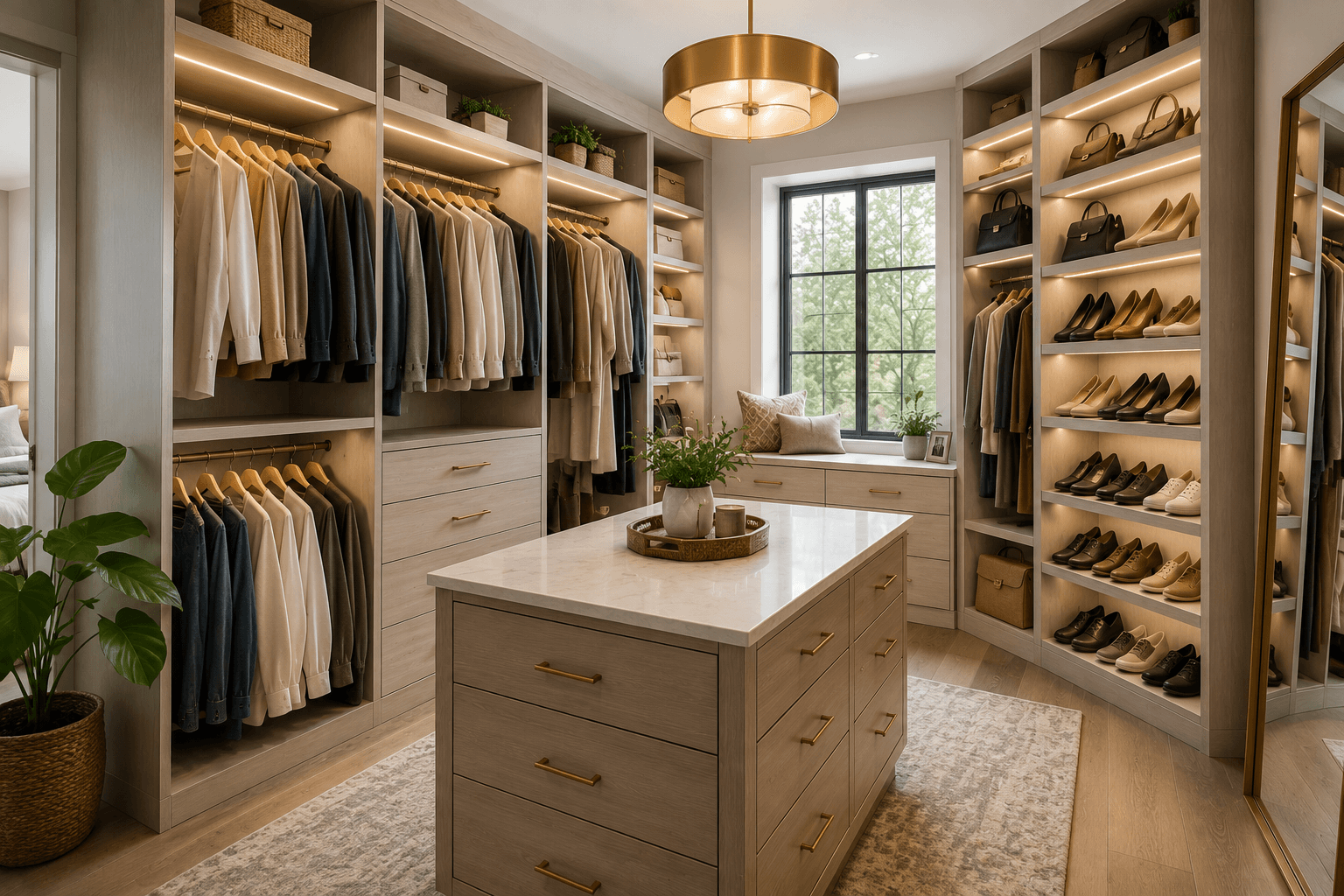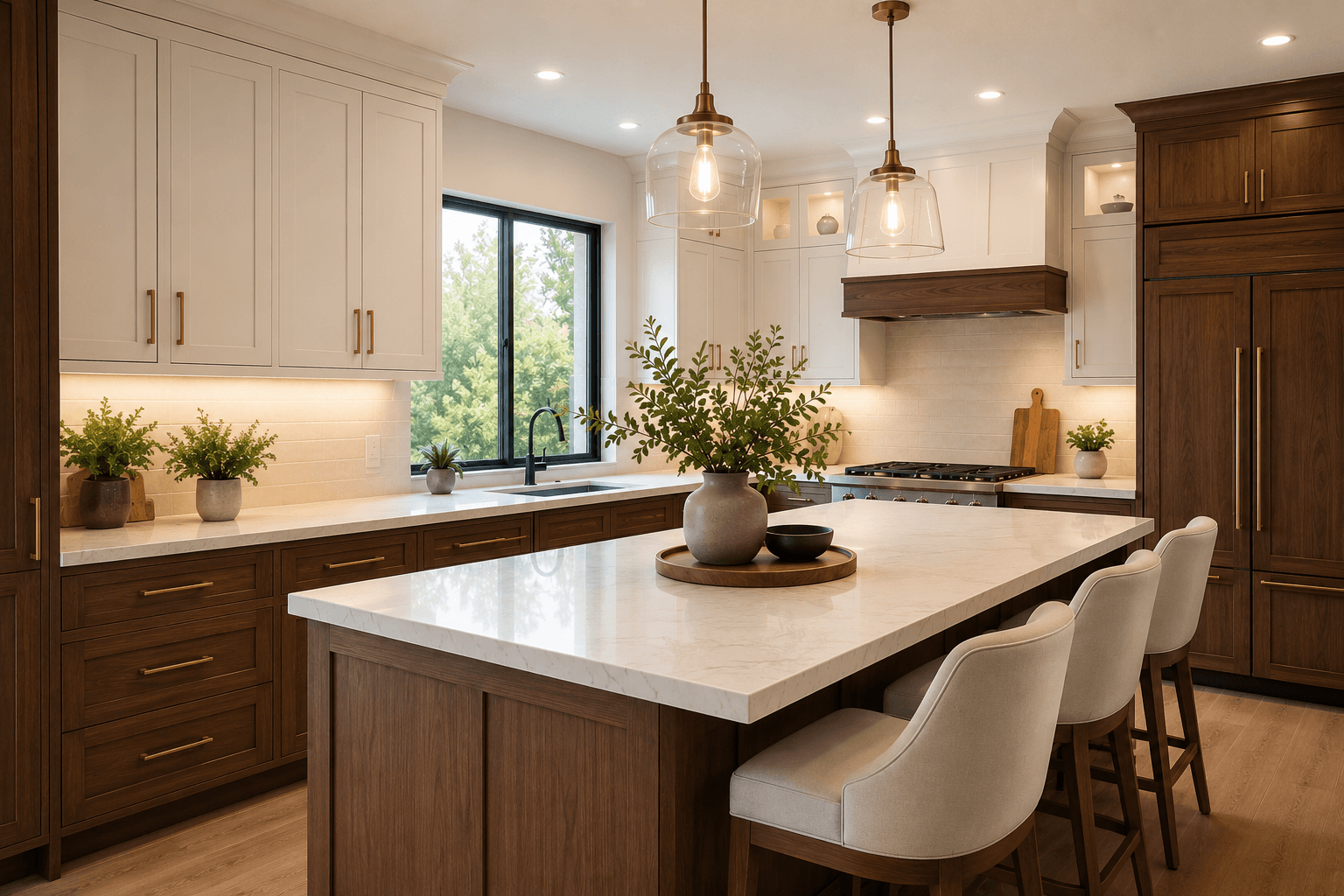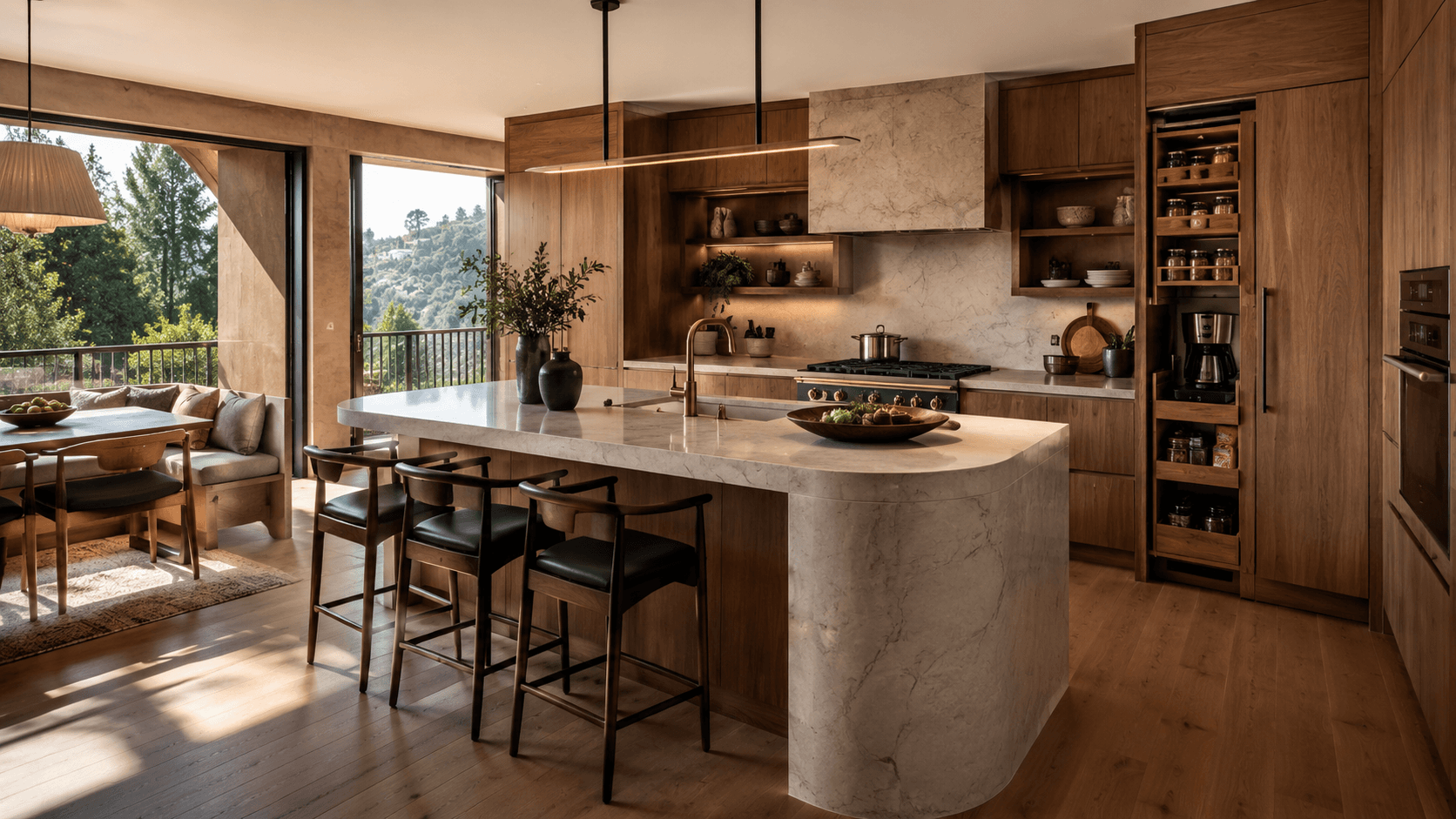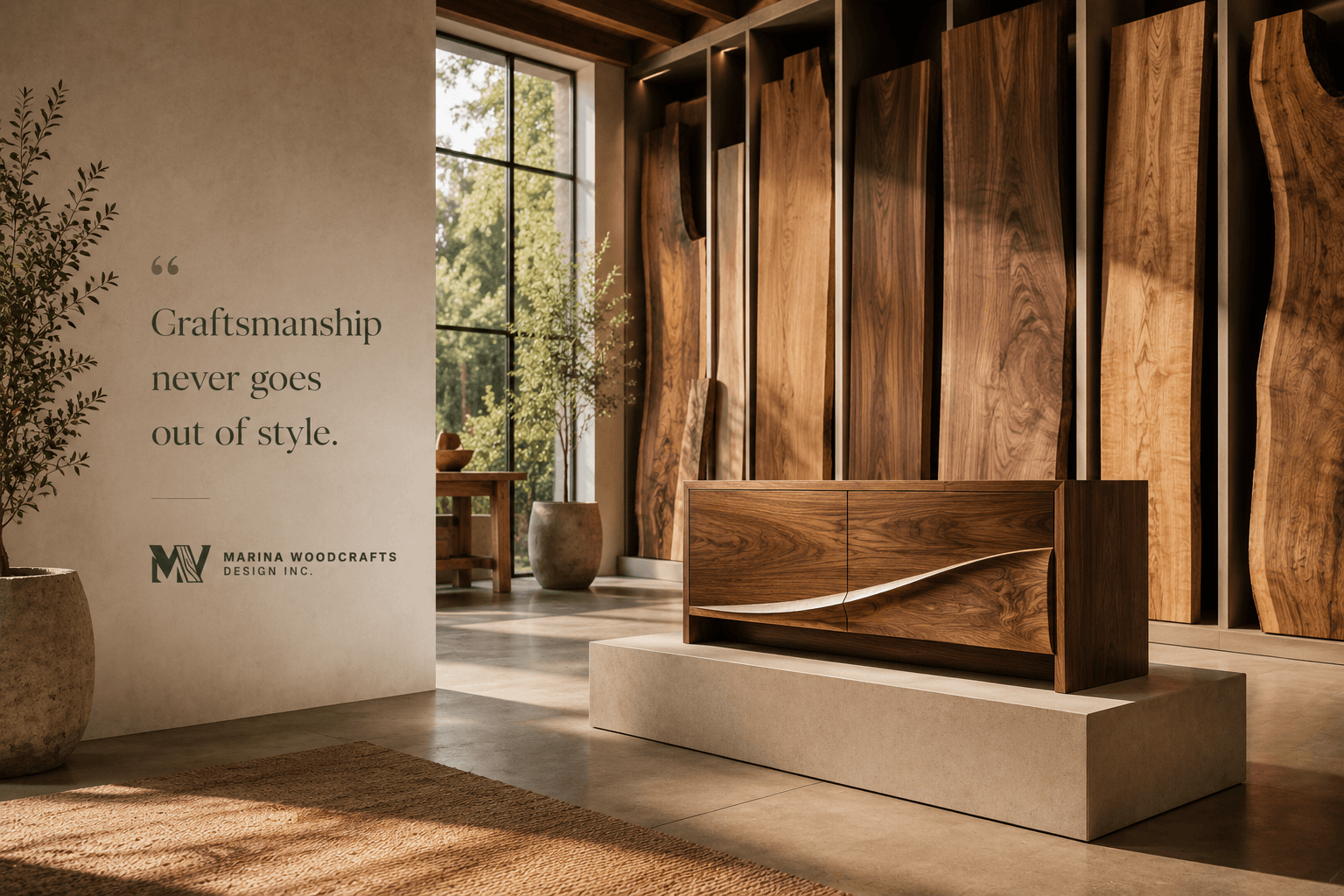
Thoughtful custom woodwork can turn an ordinary California home into a space that feels genuinely and uniquely yours.
Finding the right partner for custom woodcrafts and cabinetry in California can feel overwhelming. There are styles to consider, materials to sort through, budgets to respect, and, of course, the question of whether the finished pieces will actually look and feel the way you imagine. We work with homeowners every day who start out with a folder full of inspiration photos and a simple goal: they want their home to feel more like them.
In this Guide to the Best Custom Woodcrafts and Cabinetry in California (2026 Edition), we want to share the same practical advice and design insights we use in our own projects across Woodland Hills and the surrounding areas. Our aim is to help you understand what really matters when you are investing in custom cabinetry or custom wood furniture in California so that your choices hold up aesthetically, structurally, and emotionally over time.
We know that custom work is not just about measurements and joinery. It is about the way your hand runs along a cabinet edge when you make coffee in the morning, how your dining table looks in the evening light, and whether the storage actually supports how your family lives. With that in mind, we will walk through design, materials, construction details, and the questions you should feel comfortable asking any custom furniture maker in California before you commit.
Why Custom Woodcrafts Still Matter in a Fast-Furniture World
Custom woodcrafts and cabinetry are about more than creating something that fits a tricky corner or unusual ceiling height. When custom is done well, you get three things that mass-produced furniture rarely offers: a precise fit, a coherent design language throughout your home, and a level of durability that respects your investment.
We see this especially clearly in California homes, where architectural styles can shift from mid-century to Mediterranean within a few blocks. Off-the-shelf cabinets often fight those architectural details instead of complementing them. Custom pieces, on the other hand, can pick up on the lines, proportions, and materials that already exist in your home, so everything feels intentional.
There is also a sustainability angle here. A single, well-made piece of custom wood furniture in California can stay with you for decades, sometimes for generations. When we choose hardwoods carefully, use strong joinery, and design with future maintenance in mind, we are naturally reducing waste and avoiding the constant cycle of replacing worn-out pieces.
Key Factors to Consider When Choosing Custom Cabinetry
Cabinetry is often the biggest custom investment in a home, particularly in kitchens, bathrooms, and built-in storage areas. Getting it right means thinking beyond color and door style.
Function Before Finishes
We always encourage you to start with how you live, not just how you want the space to look in photos. We talk through questions like:
Do you cook daily, occasionally, or mostly order in?
How many people are using this space at the same time?
Are there accessibility needs, such as lower pull-out shelves or wider clearances?
What items do you need close at hand, and what can live in deeper storage?
That functional conversation shapes everything from cabinet layout to hardware choices. Only after the layout flows with your life do we move toward finishes and decorative details.
Construction Quality You Can Feel
When you are comparing options for the best custom woodcrafts and cabinetry in California, it helps to know a few simple indicators of quality. You do not need to be a carpenter to spot them. For cabinetry, we pay close attention to:
Box construction: Plywood boxes with solid joinery generally outlast particleboard. We look for tight, clean joints and solid backs.
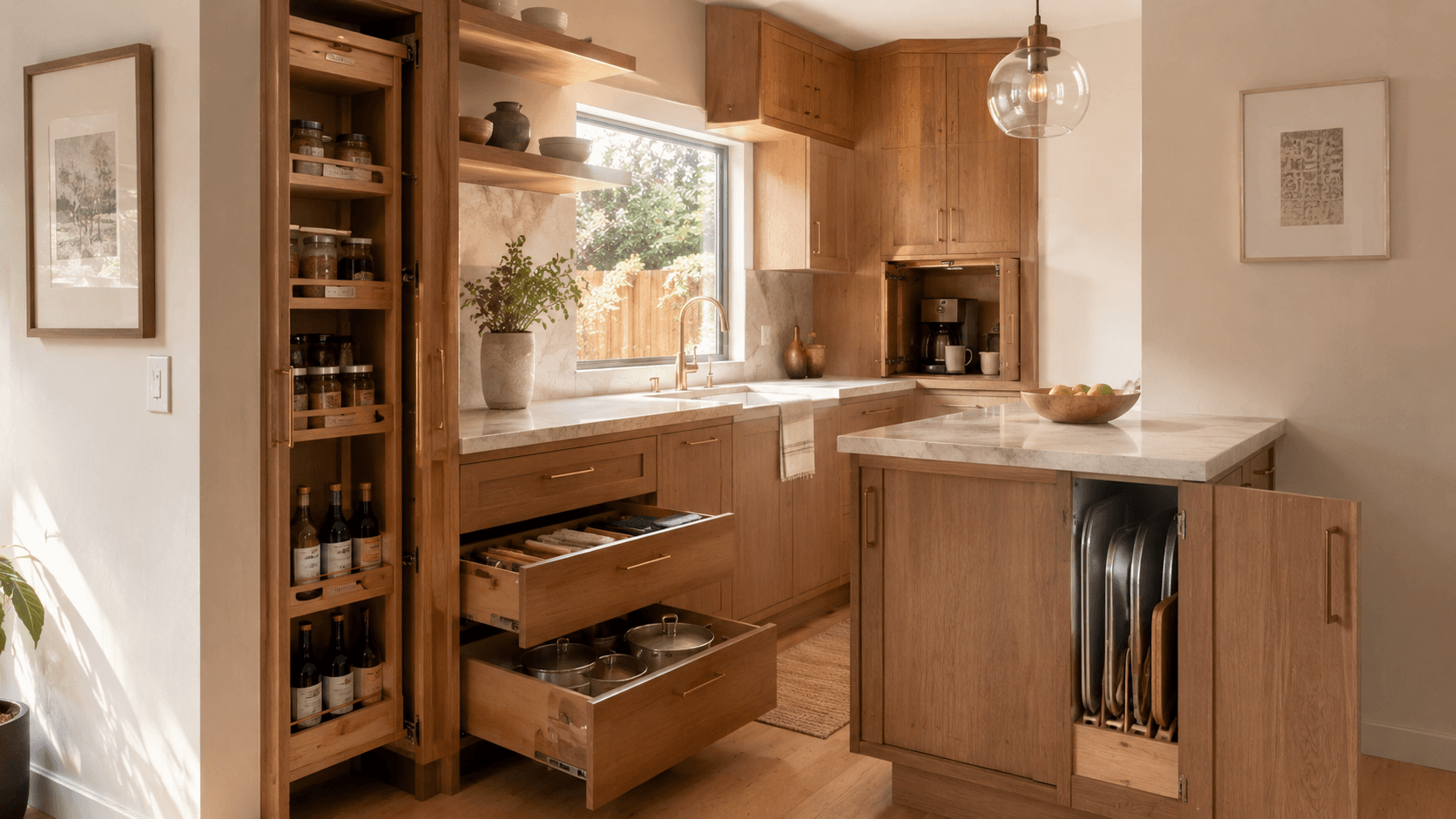
Drawer construction: Dovetail joinery, smooth soft-close slides, and solid wood sides are signs that the drawers are built for long-term use.
Face frames and doors: Even, narrow gaps and doors that sit flat (not warped) tell you the pieces have been milled and assembled with care.
Finish: The surface should feel smooth to the touch, without rough patches, drips, or cloudy areas in the finish.
These details affect how your cabinets feel every day. Good construction makes drawers that glide instead of grind, doors that close with a gentle click, and surfaces that stand up to regular cleaning.
Choosing the Right Woods and Finishes for California Homes
The climate and lifestyle in California can influence how we choose materials. Sunlight, temperature changes, and coastal moisture (in some areas) all play a role.
Hardwoods vs. Veneers
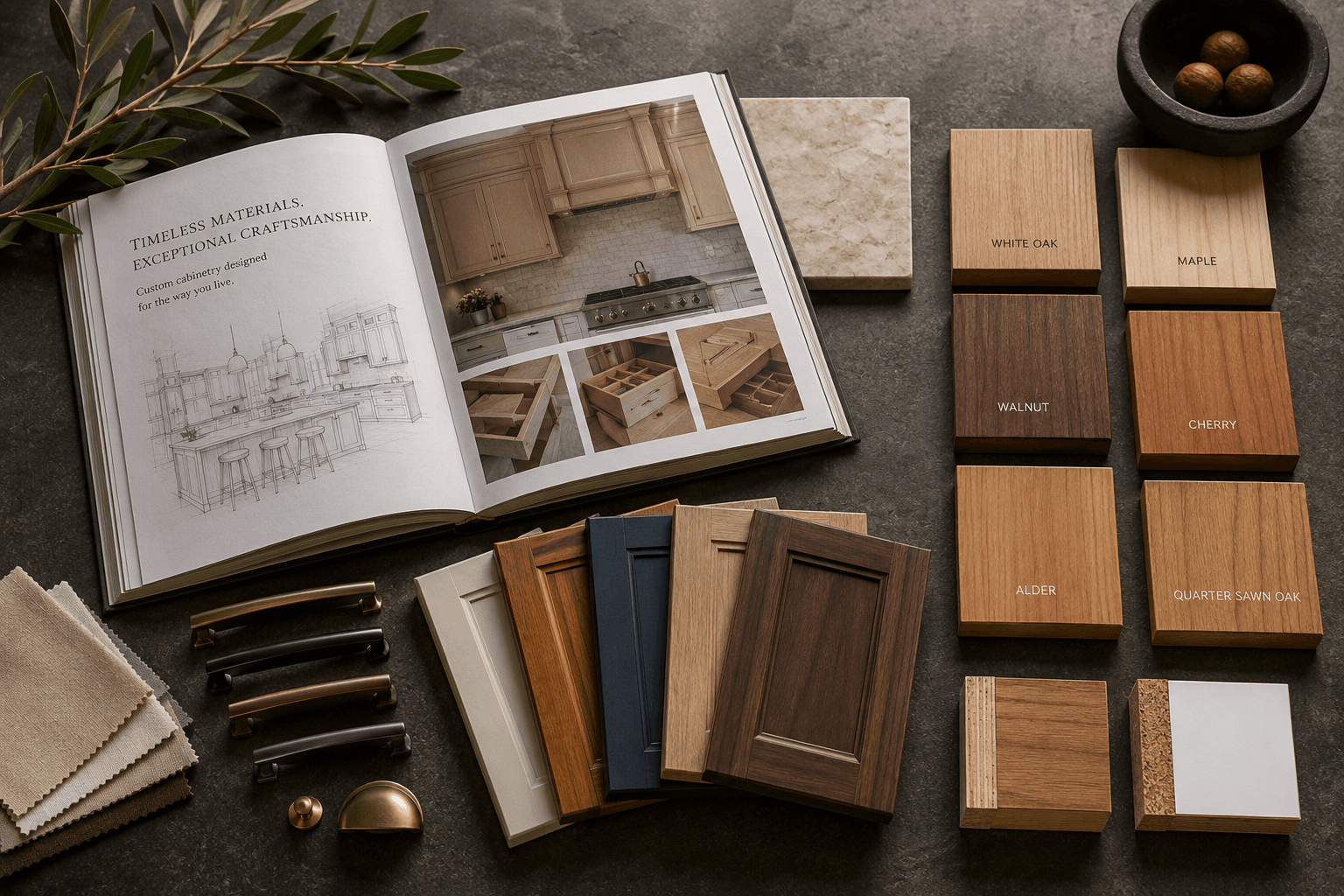
Solid hardwoods are fantastic for many applications, especially visible surfaces like doors, drawer fronts, and custom wood furniture in California dining or living spaces. They can be refinished down the road and tend to age gracefully, gaining character over time.
Veneers, when done properly, are also a high-quality choice. They allow us to achieve consistent grain patterns, use more exotic woods responsibly, and keep panels more stable over wide spans. For large cabinet sides or tall panels, we often combine hardwood edges with veneered cores to balance aesthetics and performance.
Finish Considerations
In a sunny Woodland Hills kitchen, for example, we might steer you toward finishes that resist yellowing and offer UV protection to help your cabinets stay closer to their original tone. For busy families, we usually recommend:
Durable clear finishes with a soft sheen that hides fingerprints
Stain colors that work with your flooring and countertops rather than fighting them
Painted cabinetry with high-quality primers and topcoats for better chip resistance
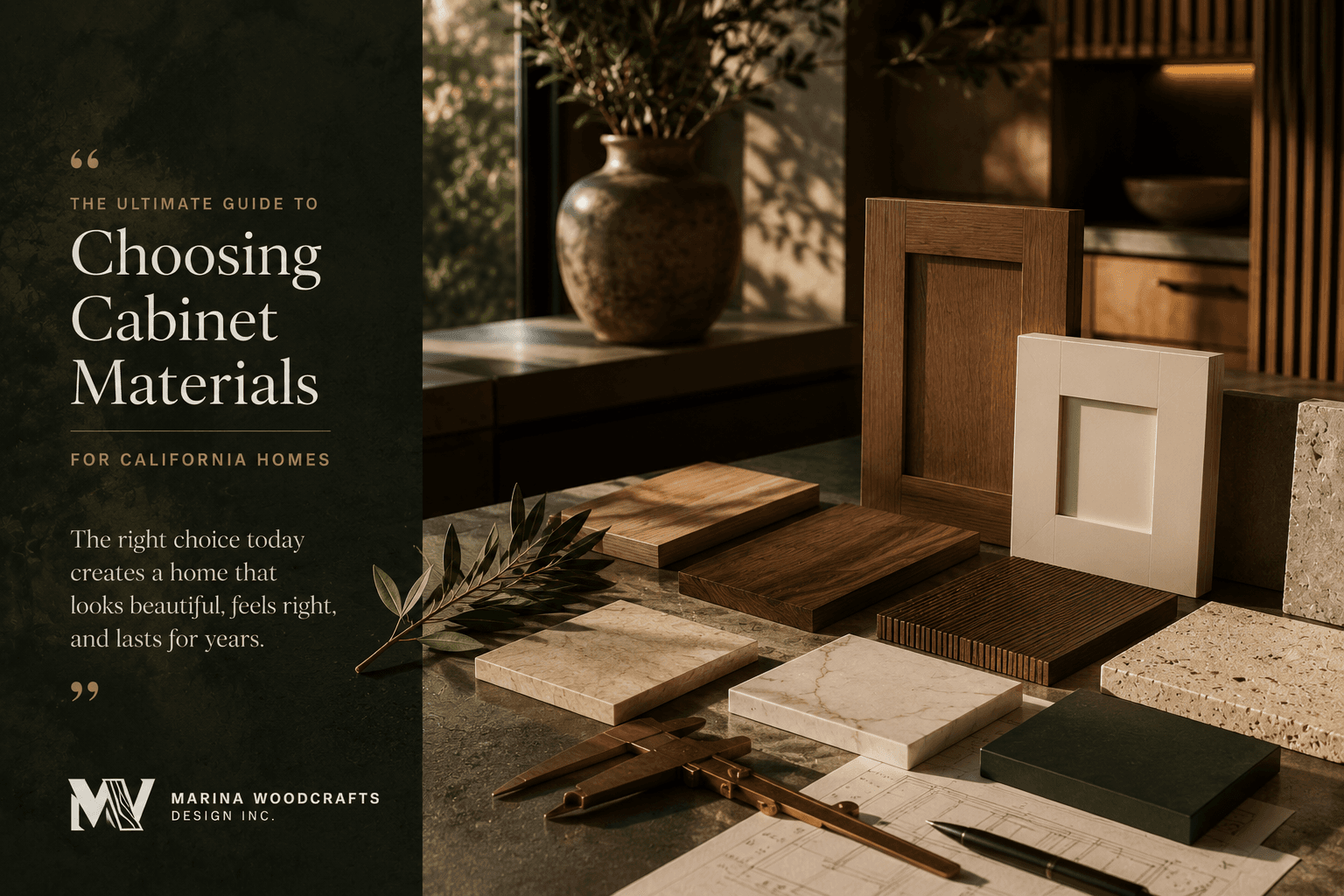
We always bring finish samples into your actual space so you can see how they look with your natural light and existing surfaces. A sample that looks warm and rich in the shop can feel completely different under the afternoon sun.
Styles and Design Details That Age Well
One of the recurring themes in any honest Guide to the Best Custom Woodcrafts and Cabinetry in California (2026 Edition) is this: trends move quickly, but your built-ins will be with you for many years.
That does not mean everything has to be plain or minimal. It simply means picking a foundation that can adapt as your taste evolves. Clean lines, balanced proportions, and thoughtfully scaled moldings tend to age more gracefully than overly ornate or overly trendy details.
In practice, this might look like:
Choosing simple Shaker or slab doors, then adding personality with hardware and lighting
Using natural wood tones in high-touch areas, then bringing color in through paint, textiles, and décor
Keeping upper cabinetry lighter and more restrained and expressing more character in islands or freestanding pieces
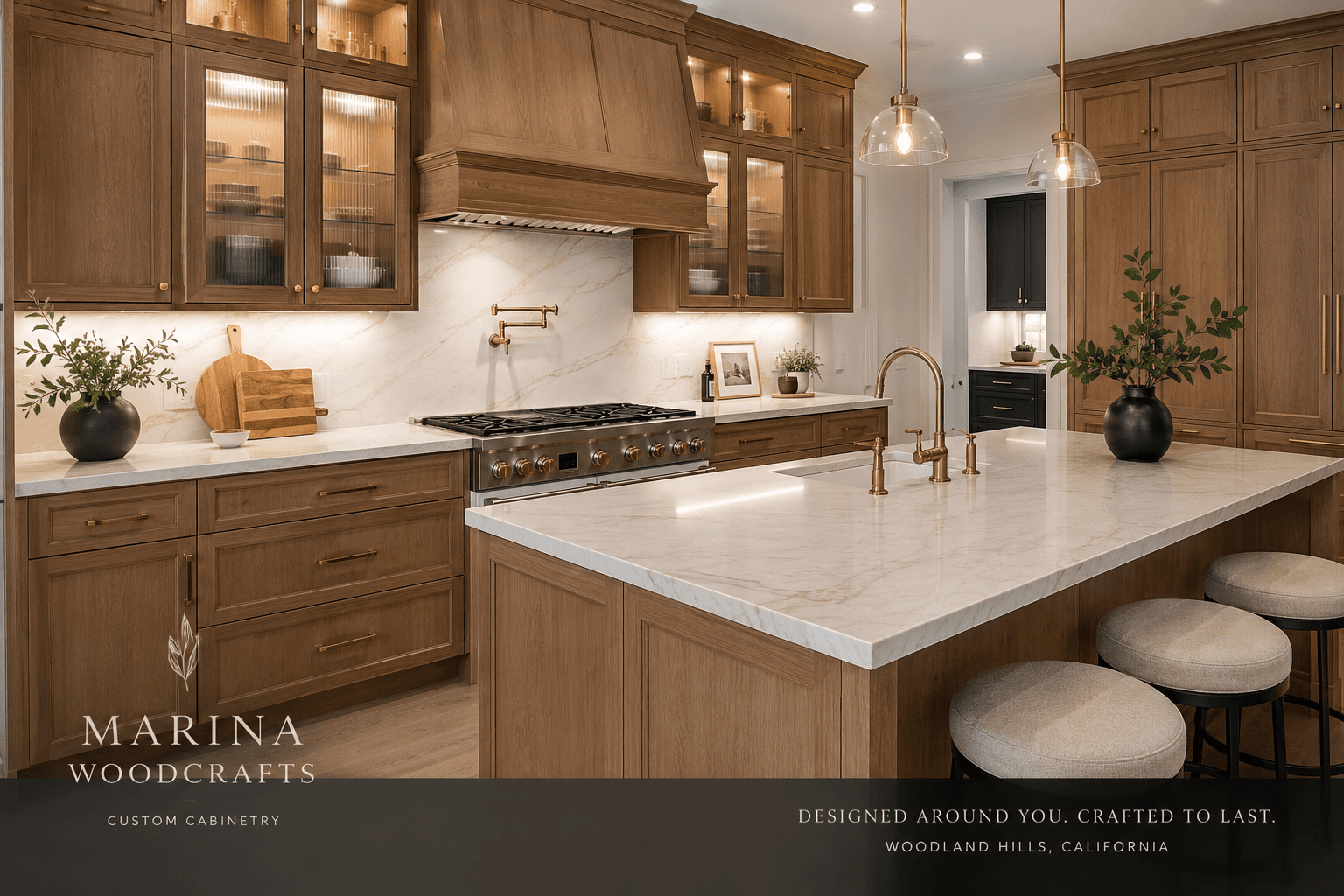
We often design one or two statement elements, like a walnut range hood or a custom oak dining bench, and let the rest of the cabinetry support those focal points.
What To Look For in a Custom Furniture Maker in California
Selecting a custom furniture maker in California is as much about communication and process as it is about skills in the workshop. You should feel that your ideas are being heard and translated, not overridden or ignored.
Here are a few practical markers that we find reassuring when someone is evaluating whether to work with us:
1. Clear Design Process
There should be a defined path from the first conversation to final installation. We walk through concept sketches, dimensions, and materials together before anything is built, so there are no surprises.
2. Realistic Timelines and Transparency
Custom work takes time. You deserve honest lead times, updates when needed, and a clear understanding of what happens at each stage.
3. Samples and Mockups
Seeing wood samples, finish swatches, and sometimes small mockups helps you make confident decisions. We like to place samples in your home so you can live with them for a few days.
4. Installation Expertise
A beautifully built piece can be compromised by poor installation. Our team plans for site conditions, wall irregularities, and access, so the final fit looks intentional.
5. Willingness To Talk Maintenance
We always explain how to care for your custom wood furniture in California once it is in place. Simple guidance on cleaning products, humidity control, and minor touch-ups goes a long way.
When those pieces are in place, the collaboration usually feels smooth, even when the project itself is complex.
Balancing Budget, Scope, and Impact
Custom woodcrafts can be tailored to different budgets if the scope is handled thoughtfully. We try to be very direct about where to invest and where to simplify so you still get meaningful impact.
A useful way to think about this is to prioritize investments by how often you see and touch an item and how difficult it would be to change later:
Highest priority: Kitchen and bath cabinetry, primary built-in storage, main dining table
Medium priority: Media units, home office built-ins, guest room storage
Lower priority: Accent shelves, occasional tables, and small decorative pieces
If your budget is tight, we might keep cabinet interiors more straightforward while focusing craftsmanship and materials on doors, drawer fronts, and visible trim. Or we might propose custom pieces in key spaces, paired with simpler solutions in secondary areas.
The goal is always the same: maximize beauty and function where it matters most to you rather than trying to stretch thinly across too many rooms.
Practical Tips for Planning Your Project
Good planning makes the entire experience smoother and helps you get the most out of working with a custom furniture maker in California. A bit of preparation on your side can make design conversations much more productive.
Here are some simple steps we suggest:
Gather reference photos, but also note what you dislike in each image
Take quick measurements of your space, even if they are rough at first
Think about what currently frustrates you in the room (clutter, reach, lighting)
Consider long-term needs, like aging in place or growing children
Be honest about your budget range so we can design within realistic boundaries
We can refine details together, but having a sense of your priorities early on lets us suggest solutions you might not have considered, such as hidden charging drawers, integrated lighting, or multi-depth shelving.
How We Approach Custom Woodcrafts and Cabinetry Projects
Every project is different, but our general approach tends to follow a familiar rhythm that keeps things moving and keeps you informed. It is not meant to feel rigid. If anything, we try to leave room for small adjustments and refinements as you see the design come together.
1. Initial Conversation and Goals
We start by listening. You tell us what is working, what is not, and what you are hoping the finished space will feel like.
2. Site Visit and Measurements
We carefully measure, photograph, and note existing conditions. Walls are rarely perfectly straight, and we plan for that.
3. Design and Materials
We develop layouts, elevations, and material suggestions, always keeping your lifestyle and budget in view. This is where you see options and make key decisions.
4. Approval and Scheduling
Once the design is finalized, we confirm pricing and timelines. Your project gets a spot in the shop schedule.
5. Fabrication
In the shop, pieces move through milling, assembly, sanding, and finishing. We pay attention to grain direction, color matching, and joinery details.
6. Installation and Finishing Touches
On-site, we install, adjust, and fine-tune. Doors are aligned, gaps are checked, and surfaces are cleaned so you can start using the space right away.
This kind of structure lets you know where your project stands at any given moment without feeling like you are lost in a black box while things are being built.
Bringing It All Together
A true Guide to the Best Custom Woodcrafts and Cabinetry in California (2026 Edition) should leave you feeling more confident, not more overwhelmed. The core ideas are actually simple: choose designs that suit how you live, materials that respect your climate and style, and craftspeople who welcome your questions and input. When those pieces come together, your home starts to feel more grounded, more intentional, and more like a reflection of your own story.
Planning a project in Woodland Hills or the greater Los Angeles area?
Request a Free Consultation