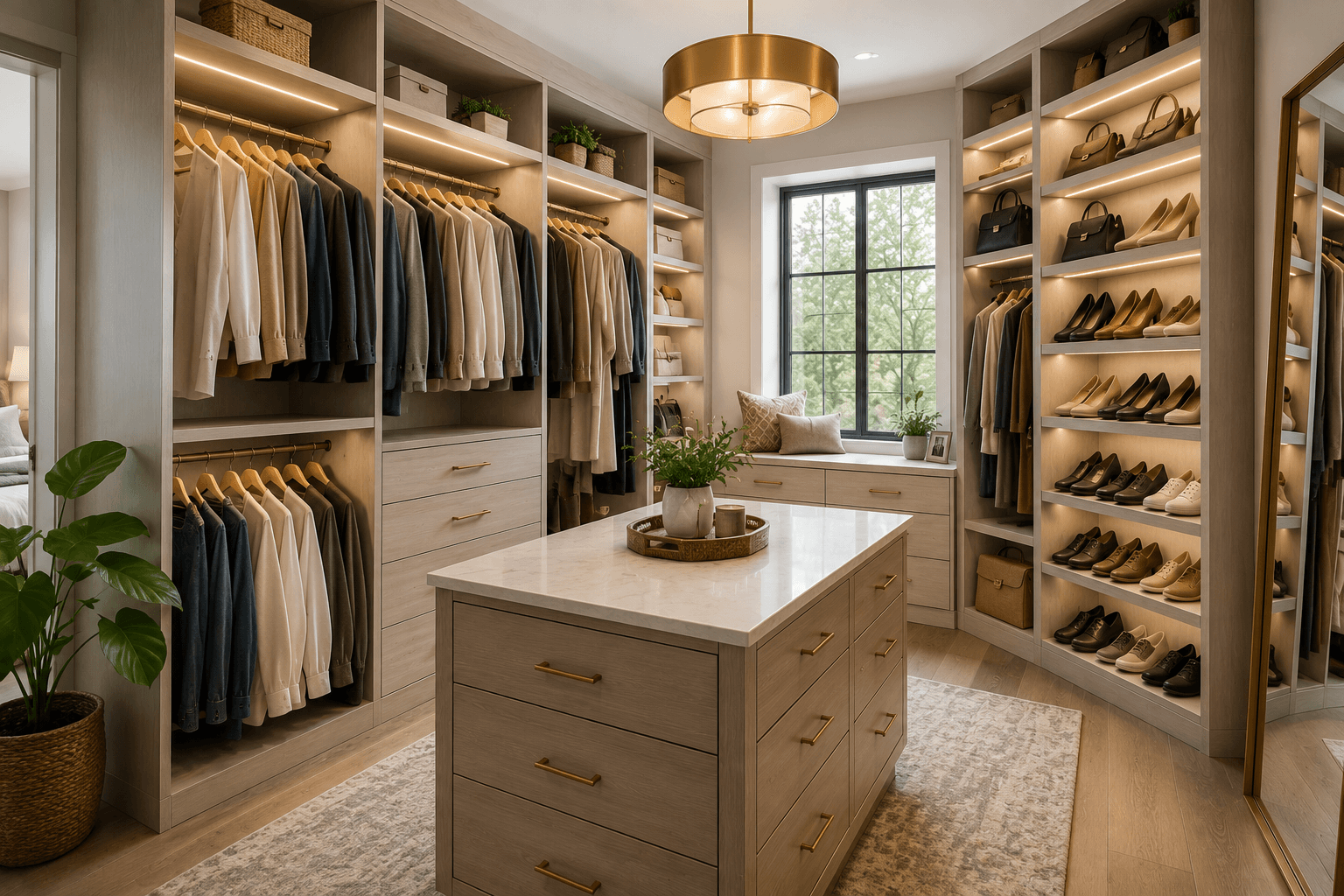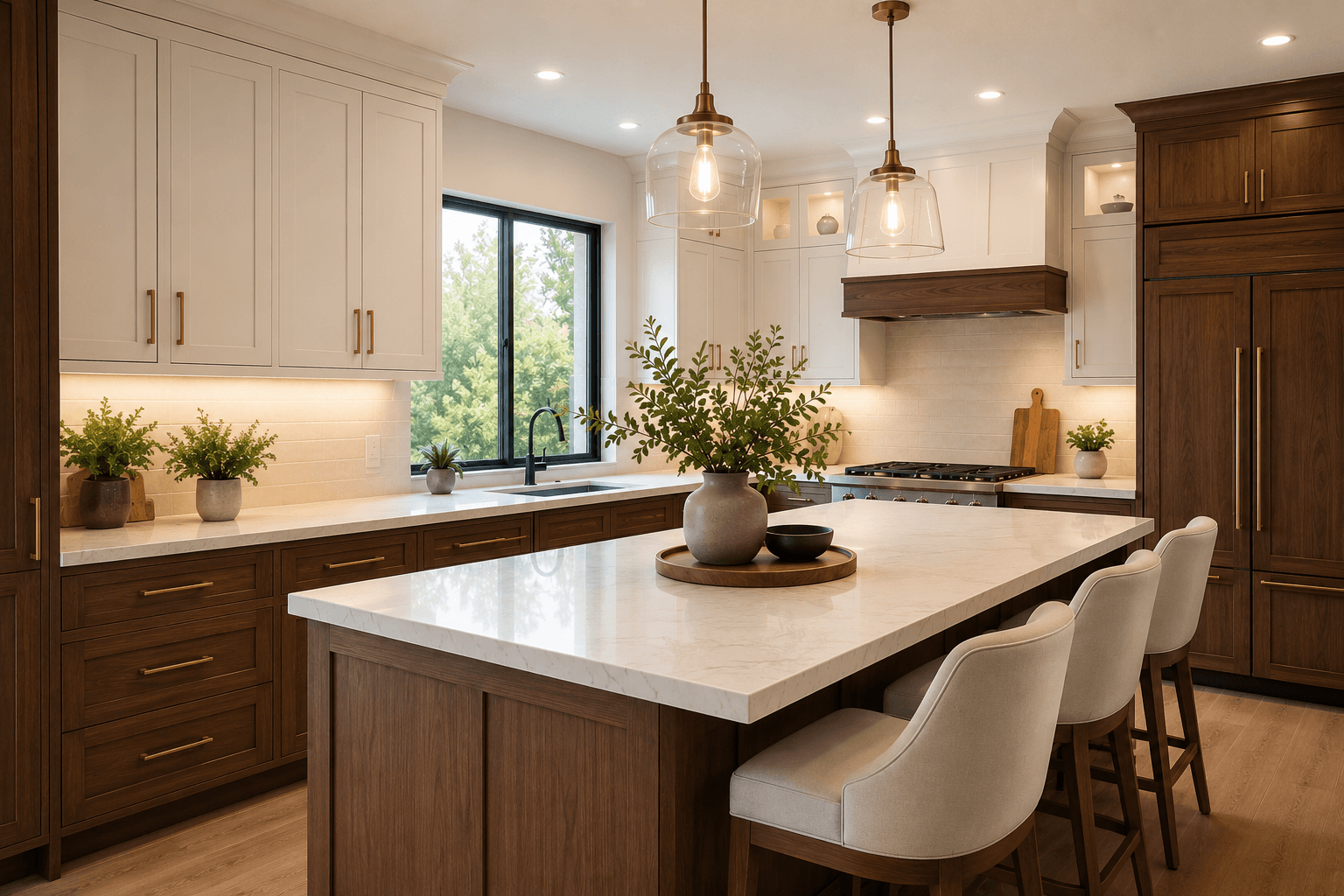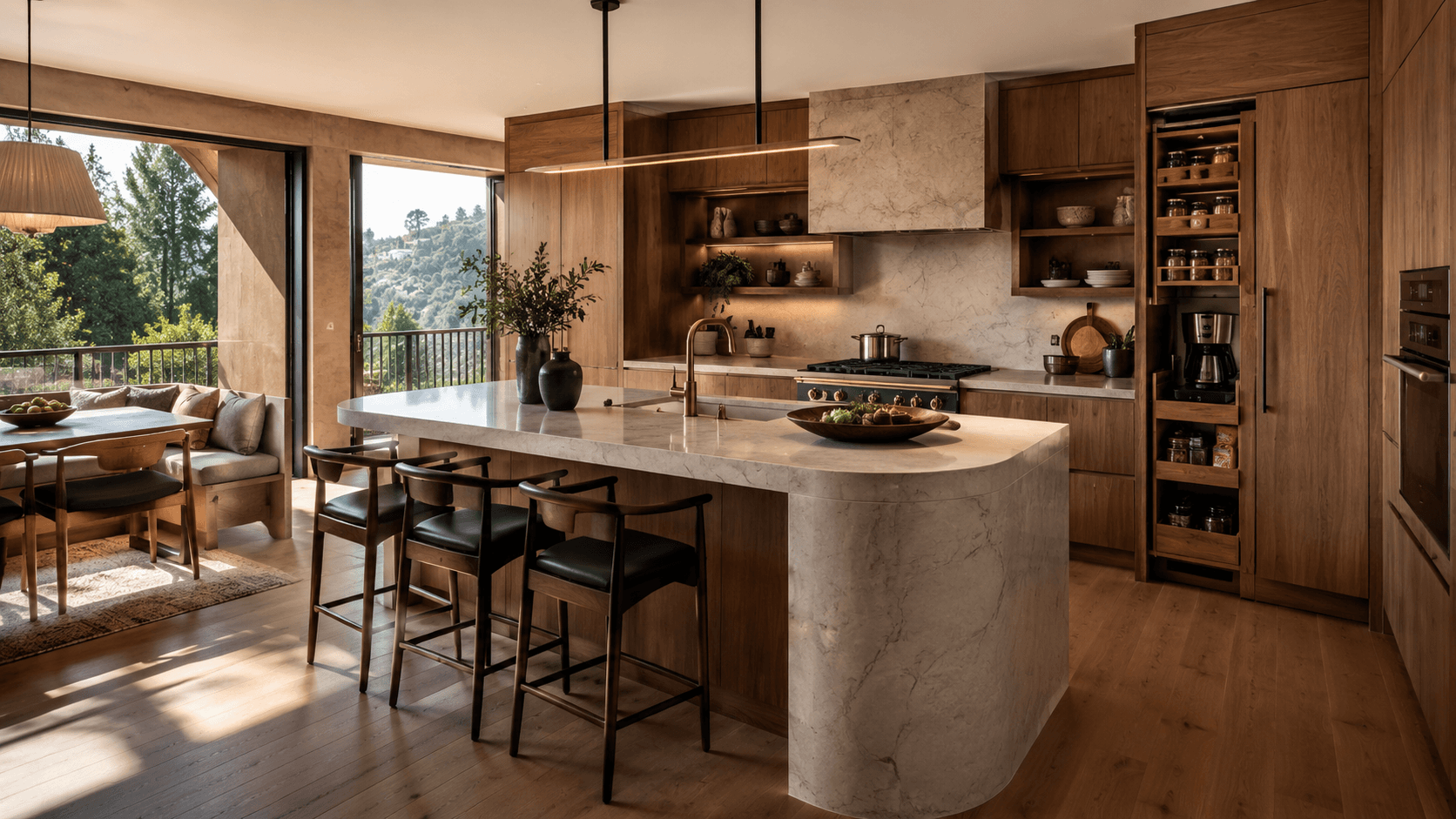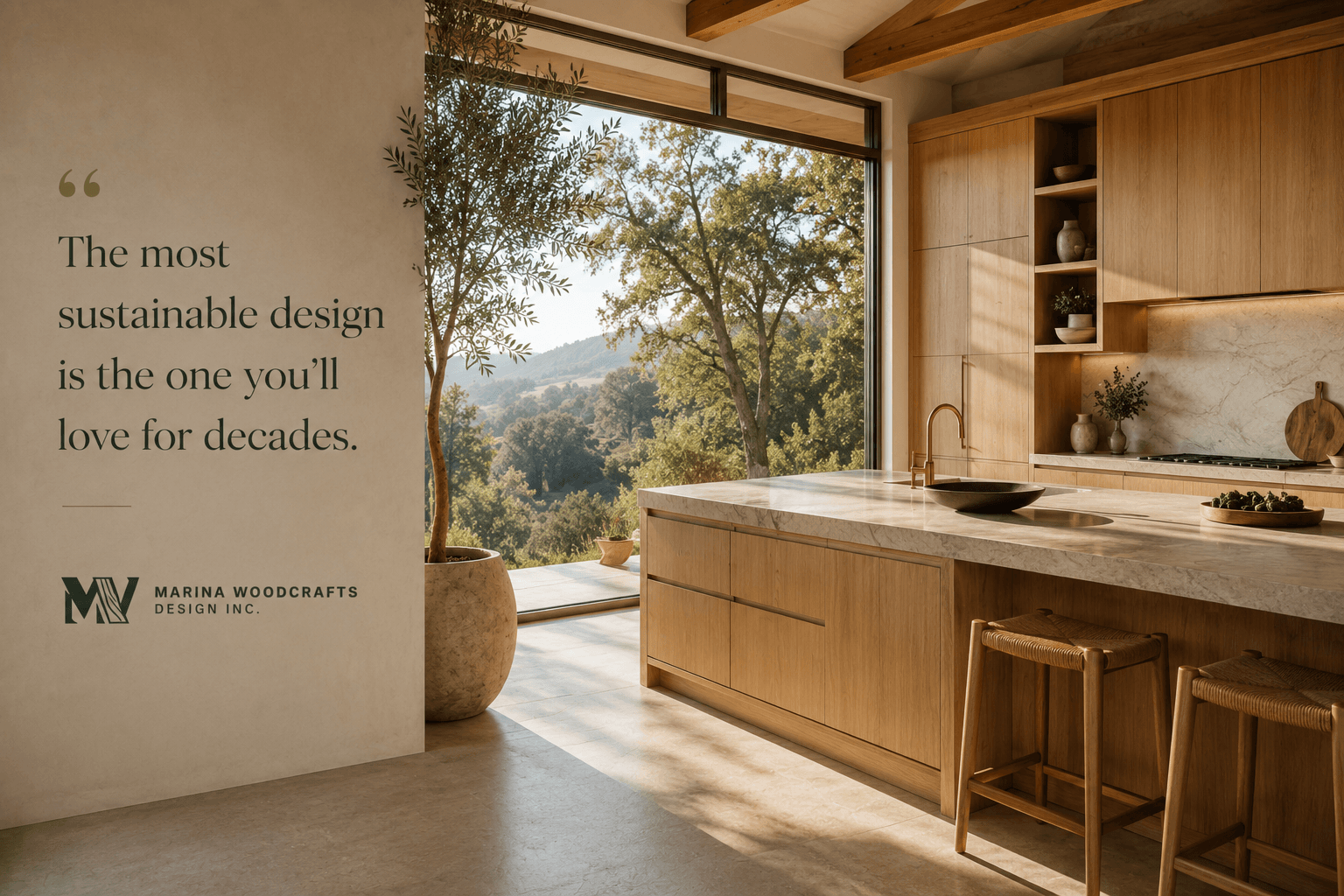
Thoughtful cabinetry choices are helping California homeowners create healthier, more sustainable living spaces without sacrificing beauty, functionality, or craftsmanship.
When planning new cabinets, most homeowners naturally focus on style, color, and storage. Increasingly, however, another question has become part of the conversation:
How can these cabinets be healthier for my family and better for the environment?
We have seen this shift firsthand. Homeowners throughout Woodland Hills and across California are looking for materials that last longer, finishes that support healthier indoor air quality, and designs that remain attractive and functional for years rather than following short-lived trends.
Sustainable cabinetry is no longer a niche preference. For many homeowners, it has become an important part of creating a home that reflects both their values and their lifestyle.
In this article, we'll explore what sustainable cabinetry actually means, what to look for when selecting custom kitchen cabinets, and how thoughtful design choices can turn a kitchen renovation into a long-term investment.
What Makes a Cabinet Truly Sustainable?
Sustainability is often discussed in broad terms, but in cabinetry it comes down to several practical considerations:
* Responsible material sourcing * Healthier finishes and adhesives * Long-term durability * Waste-conscious manufacturing practices
When evaluating sustainable cabinetry, we look beyond appearance alone. The materials used, how they are manufactured, and the products applied during finishing all contribute to the overall environmental impact and performance of the finished product.
A cabinet that looks beautiful but releases harsh chemicals into the home for years after installation is not truly supporting a healthy living environment.
Likewise, a cabinet that needs replacement after only a few years creates unnecessary waste and additional resource consumption.
True sustainability includes both environmental responsibility and long-term durability.
Responsible Wood and Panel Selection
The foundation of any cabinet begins with the materials used to build it.
Many sustainable cabinetry projects incorporate a combination of responsibly sourced hardwoods and high-quality engineered panels designed to maximize stability while reducing waste.
Important considerations often include:
* Wood sourced from responsibly managed forests * Low-emission engineered materials * Panels with little or no added formaldehyde * Materials suited to California's climate conditions
These decisions may not be immediately visible, but they influence how cabinets perform for years to come.
They affect durability, indoor air quality, resistance to warping, and the overall lifespan of the project.
This is the less visible side of sustainability, but often one of the most important.
Healthier Finishes and Adhesives
Finishes are often where homeowners notice the biggest difference between conventional cabinetry and more environmentally conscious alternatives.
Many traditional coatings contain higher levels of volatile organic compounds (VOCs), which can continue releasing chemicals into indoor air after installation.
For this reason, we place significant emphasis on selecting finishes and adhesives that balance durability with healthier indoor air quality.
In Southern California homes, finishes must also withstand:
* Daily cleaning * Exposure to sunlight * Heat generated by cooking * Normal household wear and tear
The goal is to create cabinetry that looks beautiful and performs well without introducing unnecessary chemicals into the home environment.
Homeowners often notice the difference immediately. The space feels cleaner, fresher, and more comfortable from the day the cabinets are installed.
Why California Homeowners Are Making the Switch
California homeowners have long been leaders in sustainability, wellness, and environmentally conscious design.
Many clients begin the conversation already familiar with terms such as low-VOC finishes, formaldehyde-free materials, and responsible sourcing practices. They are looking for ways to align their renovation projects with those priorities.
Several motivations consistently drive this decision.
Healthier Indoor Air Quality
A home should be a place where people feel comfortable and protected.
When a kitchen renovation introduces a large volume of new materials, those materials inevitably affect the indoor environment.
This is especially important for households with:
* Young children * Individuals with allergies * Asthma sufferers * People sensitive to strong odors or chemicals
By choosing healthier materials and finishes, homeowners can reduce long-term off-gassing and create a more comfortable living environment.
Many parents tell us they appreciate knowing that the cabinets their children interact with every day were built using carefully selected materials and lower-emission products.
Long-Term Value Over Short-Term Trends
Sustainability is also about making choices that remain valuable over time.
Rather than selecting materials based solely on current design trends, many homeowners are investing in cabinetry that will continue to look and function beautifully for years.
Timeless design, durable construction, and quality craftsmanship often reduce the need for future replacements, which benefits both the homeowner and the environment.
When cabinets are built to last, fewer resources are consumed over the lifetime of the home.
Reducing Waste Through Better Design
One of the most overlooked aspects of sustainability is designing cabinetry that truly works for the people using it.
Poorly planned storage often leads to frustration, clutter, and eventually expensive renovations to correct the problem.
Thoughtful cabinet design helps homeowners maximize space, improve organization, and adapt to changing needs over time.
By creating solutions that remain functional for years, we reduce the likelihood of premature remodeling and unnecessary material waste.
Sustainability and Custom Cabinetry Work Hand in Hand
Custom cabinetry offers unique advantages when it comes to sustainability.
Unlike mass-produced products built to standard dimensions, custom cabinets are designed specifically for the home they will occupy.
This allows for:
* More efficient use of materials * Better space utilization * Higher-quality construction methods * Longer product life cycles
Instead of forcing homeowners to adapt their lifestyles around standard cabinet configurations, custom solutions are designed around how the space is actually used.
The result is cabinetry that not only performs better but also remains relevant and functional for much longer.
Creating a Kitchen You'll Feel Good About for Years
The best sustainable design decisions are often the ones that continue delivering value long after the renovation is complete.
Beautiful materials, healthier finishes, durable construction, and thoughtful storage solutions all contribute to a kitchen that supports both everyday life and long-term environmental responsibility.
Sustainable cabinetry is not about sacrificing style or functionality. It is about making informed choices that create healthier homes, reduce waste, and provide lasting value.
When those principles are combined with quality craftsmanship and timeless design, the result is a space that feels just as good years from now as it does on installation day.
Aligning Your Home With Your Values
Many homeowners who choose sustainable cabinetry are already making environmentally conscious decisions in other areas of their lives. They pay attention to energy use, reduce waste where possible, and support products that are responsibly sourced and built to last.
For many, extending those values into the home feels like a natural next step.
Choosing eco-friendly cabinetry is about more than adding storage. It is a long-term investment in how your home reflects your priorities and supports your lifestyle. While the impact may seem subtle, there is a unique satisfaction that comes from knowing your kitchen was designed with both beauty and responsibility in mind.
Long-Term Value Instead of Short-Term Trends
Kitchen renovations are often influenced by trends. Colors, hardware finishes, and design styles seem to change every year, making it easy to feel pressure to follow whatever is currently popular.
Sustainable design takes a different approach.
Rather than chasing short-lived trends, it prioritizes timeless aesthetics, durable materials, and functional layouts that remain relevant for years to come.
The result is a kitchen that feels just as comfortable and attractive ten or fifteen years from now as it did on installation day. That kind of longevity is one of the most meaningful forms of sustainability.
Designing Eco-Friendly Custom Kitchen Cabinets in California
Once you've decided to prioritize sustainability, the next step is turning those goals into a design that genuinely works for your household.
This is where thoughtful planning makes all the difference.
Before discussing materials or finishes, we typically start by understanding how the kitchen is actually used. Do you cook daily? Entertain frequently? Need additional pantry storage? Have a busy family schedule?
The answers help guide both the layout and the material selections that will best support your lifestyle.
Designing Around Everyday Life
A sustainable kitchen should function effortlessly.
When a kitchen works well, homeowners are less likely to become frustrated with the layout and less likely to consider another renovation prematurely.
For many projects, we focus on features such as:
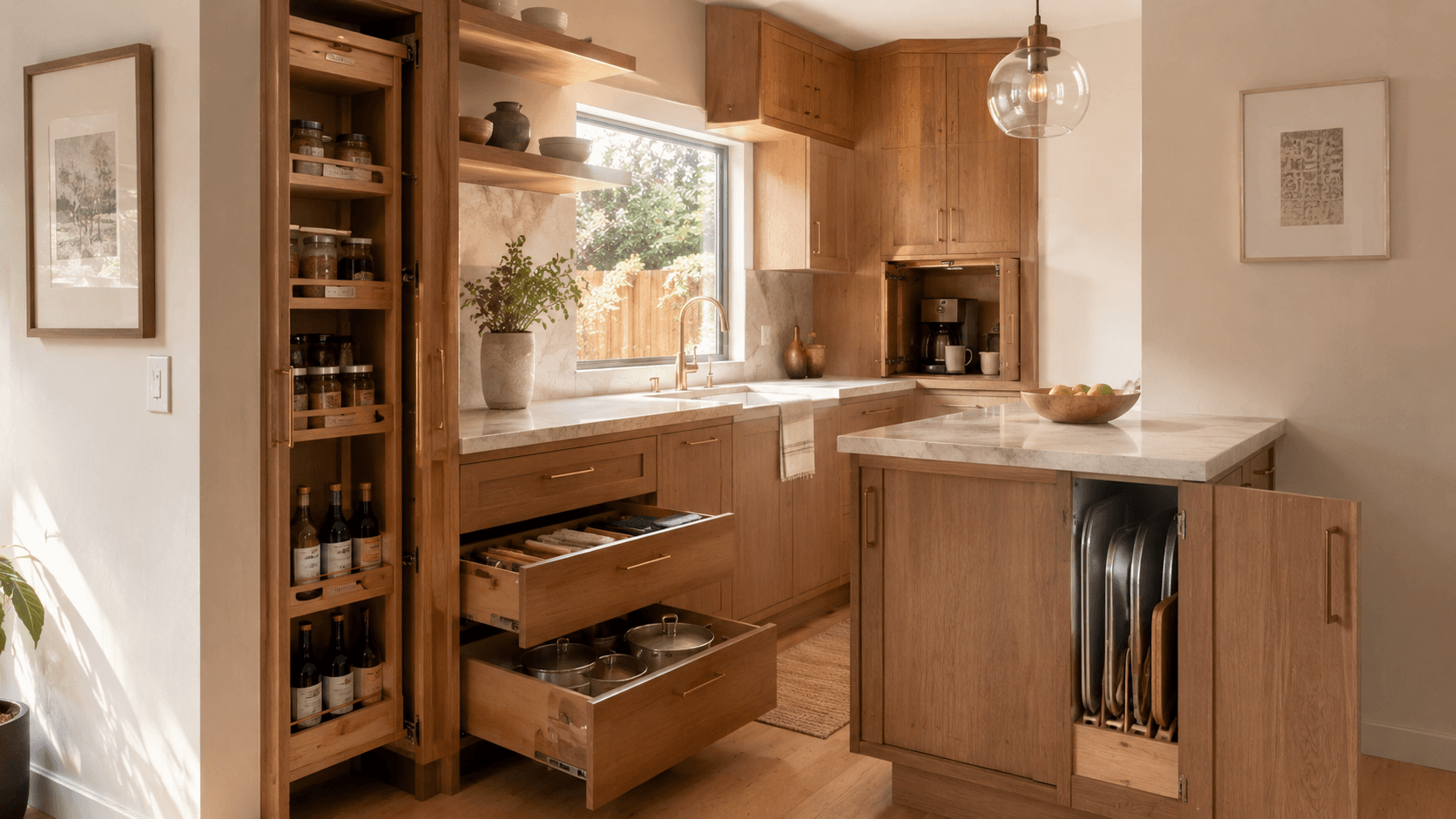
* Work zones that create a natural flow between preparation, cooking, and cleanup * Deep drawers and pull-out storage that improve accessibility * Vertical dividers for trays, cutting boards, and baking sheets * Integrated recycling and composting solutions
These details may seem small individually, but together they create a kitchen that is more efficient, organized, and enjoyable to use.
Good design reduces waste, improves functionality, and helps homeowners get more value from the space over time.
Material and Finish Selections That Match Your Style
Choosing sustainable materials does not mean limiting your design options.
Whether your style leans toward contemporary, traditional, California coastal, or transitional design, environmentally conscious cabinetry can be tailored to suit the aesthetic you love.
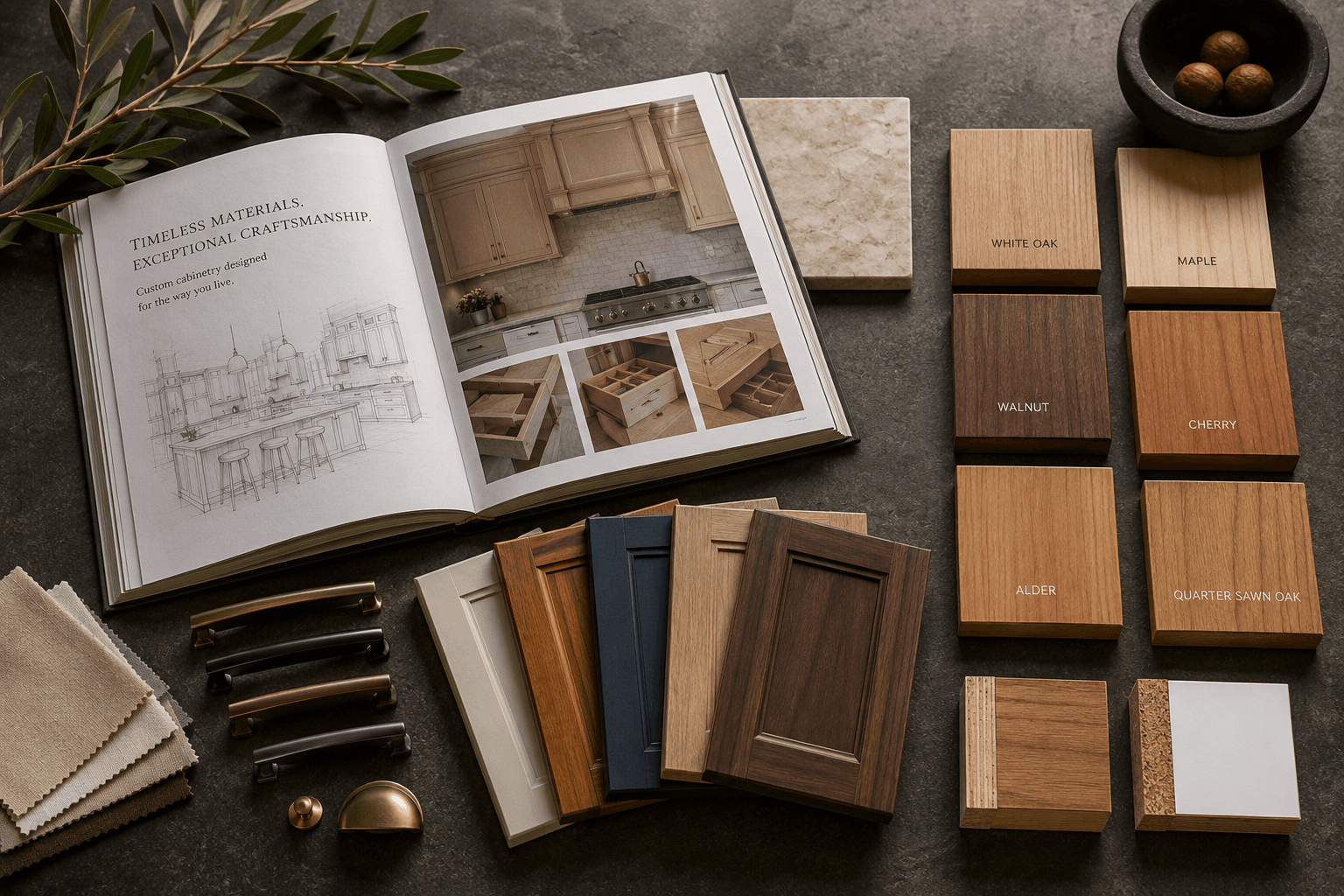
Many projects combine natural wood tones with painted finishes to create warmth, contrast, and visual depth.
The key is selecting products that support both environmental goals and long-term durability while achieving the appearance you want.
We also discuss how different finishes age over time. Some woods develop a rich patina that homeowners appreciate, while others maintain a more consistent appearance for years.
Understanding these characteristics upfront helps ensure the finished kitchen continues to meet expectations well into the future.
Why Craftsmanship Matters in Sustainable Cabinetry
Even the best materials can underperform if they are not assembled and installed properly.
Sustainability is not only about what a cabinet is made from. It is also about how it is built.
Quality craftsmanship contributes directly to longevity through:
* Strong joinery techniques * Reliable hardware systems * Precise installation * Attention to structural details
These are the elements homeowners notice long after the excitement of a renovation has passed.
Cabinet doors remain aligned. Drawers continue to glide smoothly. Shelving stays stable under everyday use.
In Woodland Hills, we also consider environmental factors such as sunlight exposure and heat. Proper design and installation help minimize fading, reduce stress on materials, and extend the life of the cabinetry.
These small decisions add up to a kitchen that performs beautifully for many years.
How Sustainable Cabinetry Improves the Renovation Process
When sustainability becomes part of the project from the beginning, the entire renovation tends to be approached more thoughtfully.
Material selection, construction methods, and even demolition decisions are evaluated through a long-term lens.
For example, during a kitchen renovation, it may be possible to:
* Repurpose existing cabinetry in another part of the home * Donate usable materials instead of sending them to landfill * Reuse quality wood components in future projects * Reduce waste through more efficient planning and fabrication
Sustainability is often less about dramatic gestures and more about making smarter decisions throughout the process.
The same philosophy applies during installation. Careful scheduling and preparation help minimize disruption while ensuring materials are handled responsibly from start to finish.
Questions to Ask Before Choosing Sustainable Cabinets
If you are beginning the planning process, asking the right questions can help you make informed decisions.
Consider discussing:
1. What materials will be used in the cabinet construction, and how do they affect indoor air quality?
2. Which finishes and adhesives will be applied, and are lower-emission alternatives available?
3. How does the design support long-term functionality and reduce the need for future renovations?
4. What steps are taken to reduce waste during fabrication and installation?
5. How are durability and longevity addressed in the construction process?
Clear answers to these questions will help ensure your cabinetry supports both your practical needs and your sustainability goals.
The best eco-friendly kitchens are not defined by marketing language. They are defined by thoughtful materials, quality craftsmanship, and design decisions that continue providing value for years to come.
Planning a project in Woodland Hills or the greater Los Angeles area?
Request a Free Consultation